

ARTICLES
Written By Rich For You.
What's Holding You Back? You Are.
The more insidious of life's obstacles are your internal obstacles.
People, institutions, rules, regulations, and hierarchies all play major roles in our life. They get in our way, they make us stumble, we get frustrated, and we give up.
I start all workshops and coaching relationships with the discussion of Limiting Beliefs. Why? In life, we run into so many external obstacles. People, institutions, rules, regulations, and hierarchies all play major roles in our life. They get in our way, they make us stumble, we get frustrated, and we give up. They win.
The more insidious of life's obstacles are your internal obstacles. I've broken them down into manageable chunks to allow you to understand them and to hopefully assess and ameliorate each one. When I think of limiting beliefs in my life, I call them life's 'Little Stinkers'. Here they are:
What We've Learned
These are the 'hard-wired' internal obstacles that are drilled into us from an early age. 'Don't do this' and 'you can't do that' play a major part in our learning process. We might have parents, siblings, teachers, and other adults in our life telling us what is right and wrong. Not that it's a bad thing — it's important to do — but sometimes they say certain things that are seared in our personality.
Examples: "They're out of your league" "No one can get an A in that class" "You're not artistic" "You can't sing"
What We've Experienced
These are the myriad of personal experiences when we've tried to step out of our bubble and try new things. And they don't go well. We try something new once or take a big step out of our comfort zone and fail. We revert back to a safe spot and constantly repeat to ourselves that we shouldn't go there — it's a waste of time.
Examples: "We shouldn't go there" "We can't do it" "It's not in our DNA" "I'd be happier staying the same"
What We Think/Fear
This is the third level of limiting beliefs. Take what we've learned and what we've experienced, mix them together, and you end up here. These are all the limiting beliefs we have in our head and we project them all into the future. We mentally scare and hold ourselves back from learning new things, experiencing new practices, and meeting new people.
Examples: "If I do it, I will fail" "This will be a futile exercise" "They won't like me" "They will laugh at me" "I will lose a lot of money"
What We Dodge
This is the lazy limiting belief. We get stuck or complacent in our limiting belief world and feel this is all I need to do. We take the other three limiting beliefs and let our procrastination, laziness, and distractions kick in to hold us back.
Examples: "This has worked all my life" "It's good enough" "My job is fine" (I hate the word fine) "I don't have the time"
Conclusion
If you let these limiting beliefs win, you will NEVER get the opportunity to change your life, your situation, your work, your abilities, your friendships, and possibly increase your happiness. I find if you just stay static in your life and career, you won't be happy for long. So start looking in the mirror and start eliminating those internal obstacles!
Deliver Life-Changing Presentations Every Time.
What would happen to your career if you gave life-changing presentations?
Some people love to give presentations. Some people hate it. Most people fall somewhere in between these two points on the presentation spectrum.
What outcome do you want from your presentation? A decision? Enthusiasm for a idea? A sale? A way to present bad numbers so they look good?
I've given thousands of presentations — from a small status update for my division, or an 850+ audience at The Hartford Insurance Company, all the way to major sales presentations to McDonald's and Home Depot.
It could be a myriad of things — but all great presentations have a few critical areas where they excel — Purpose, Resonance, Enthusiasm, Experience, Narrative. Let's look at each one and how it impacts your presentation:
Purpose - Why are we here?
I can't tell you how many presentations I've been to where two minutes into the presenter speaking, I'm already lost. They've given me no semblance of what they will be covering and some basic guideposts to gauge where we are in the presentation.
How to fix: One of your first slides should cover a brief summary of what you will be speaking about and what you expect from the presentation. Something as simple as: "Today, I will be covering why we should begin to move all of our executives onto iPads. I'm going to cover the current state, impact, and desired state of our mobile systems." It's that easy.
Resonance - Win your audience.
You are not reading out test scores — you're trying to sway your audience to feel for your position. So empathy and communication play large parts in how you give and relate your presentation to your audience. One definition of resonance is 'a quality of evoking a response'. Your job is to feel for your audience — understand how they are absorbing the information you're presenting.
How to fix: Keep scanning the audience — watch body language — see if they are engaged or distracted or puzzled. If they are checking out — get them involved — ask questions of the audience. Ask for their opinion and get them to raise their hands. Also, move around — engage all parts of your audience — get down to their level. Ask 'WHO' questions — "Who has this problem?" "Who would like to go first?". Ask 'WHY' questions — "Why do you think this is happening?" "Why did he react that way?"
Enthusiasm - Rally the troops.
Here's a little secret: All presentations are 90% Broadway. They're performances. Why? The more your audience is emotionally engaged in your presentation, the more likely they are to like it, take away key information, and tell others about it. If you just stand there and recite slides, they're going to check out, miss key information, and tell everyone you stunk.
How to fix: You are an evangelist of information. Live and breathe your info — get them excited about it too! Smile, raise and lower the tonality of your voice, and move your hands to make points. If you aren't excited about what you're speaking about, who will be?
Experience - Show them your stuff.
You need to know your topic. Many speakers get up and immediately venture down unchartered territory. When one errant question arises, they sudden fall silent or stumble with an answer. You have to know your topic cold.
How to fix: Keep your presentation on point — less is more. Stick to your topic and hammer all points of it — be prepared — anticipate most of the questions that will be asked. If you don't know something — say it: "Wow, that's a good question. I don't know, but I can find out. Let's talk after the presentation." It's that easy.
Narrative - Tell them a story.
Just spilling out facts will not help you with the other four areas. You have to relate stories - people LOVE stories.
How to fix: Tell stories. I usually incorporate at least 1-2 stories during a presentation. Make sure they stay on topic, are interesting or funny, and can be told in less than two minutes. Pick a situation in your career, someone who made a positive impact on you, or an item you found in your research. One caveat — too many stories about you will bore the audience.
P.S. If you’d like more information about how I deliver powerful presentations - Let’s talk. I’ve worked with thousands of business owners and executives and find this is a perfect way to start a coaching relationship — sign up to schedule a live, free coaching session. It's not just the mechanics — it's building confidence and knowing you can knock it out of the park.
The Best Time To Find A New Job Is When You Don't Need It.
In other words — Always be prepared to leave a job, because your employer is always prepared to leave you. More and more, many companies (not all, mind you) find themselves letting employees go for a number of different reasons.
In other words — Always be prepared to leave a job, because your employer is always prepared to leave you. More and more, many companies (not all, mind you) find themselves letting employees go for a number of different reasons. Too young/too old, too much/too little salary, old/new employee, old/new direction, high/low level position are just some of the myriad reasons why people are let go from their place of employment. Sometimes we find ourselves in the crosshairs and next thing you know, you're packing up your desk in a cardboard box.
"About six months ago i was offered a job from a supplier to my company, but I felt decently happy and comfortable working where I was. To my surprise I was laid off from work last week, and am now looking for a job."
You need to be prepared — here are the big six things I tell my happily employed clients to shield them from layoffs:
Keep your résumé/LinkedIn profile current and ready to go at a moment's notice.
Ask for testimonials when you finish projects/leave divisions/manager's move.
Embrace recruiters and interview — you never know what great position you might run into.
Develop a robust emergency nest egg (just in case).
Build your network — maintain past relationships and grow new ones with key people in your industry.
Most important — keep your skills current and focus on in-demand areas.
I hate to say this — the idea of living through a career with the same company seems to be long, long gone. Most people should expect to move at least every 2-3 years. If you don't, your employers will.
In addition, rarely will you experience major jumps in position/salary/benefits at the same organization. Most people experience larger percentage jumps when they move when they still have a job (check out this Forbes article). Waiting for a company to can you to get that severance package is a frequent strategy (especially if it's a big package), but your value in the marketplace is severely reduced.
By the way . . . if you're thinking, "I'm irreplaceable, they can't function without what I know" then you're underestimating an organization's willingness to protect themselves and make haphazard decisions based on human greed and emotions.
Day One on your new job is the first day of your new job search. Never stop looking for better. The minute your current employer doesn't need you, your butt will be out the door. Again, this perspective is not for all organizations, but it does cover the majority out there.
P.S. One final rule — Always backup key email, contacts, and project files (just in case). Most people forget how important this information is until they don't let you go back to your computer and walk you out of the building. So much of your potential portfolio when you're looking for a new job will be gone if you don't save it somehow. Be prepared and always back up to a personal thumb or external hard drive.
What Do I Need To Do To Move UP?
To your questions — broadly — one needs experience, knowledge, gravitas, tools, communication skills, connections and exposure to become a CMO. Let me cover each one and I'll include your questions:
Experience
You need a requisite amount of experience to become a CMO. It's not 'how many years', it's more about how many areas do you feel comfortable in the marketing arena? I come from a marketing background — you need creative, technical, statistical, client, financial and communication experience to make CMO. You need to know all the areas you will manage — so many newly minted CMO's who hit the top rung usually are lacking in many of these areas and it shows in their performance. I'm not saying you need to be an expert in all areas — although you should have leveraged each one during your career.
Knowledge
It's what you know. Where has the industry been and where is it going? What is your competition doing? Where has your company failed and succeeded? What CAN you do to move forward? Knowledge is power and when you're at the pinnacle of your organization, you need to have a adequate grounding in the past, present, and future of your industry. People will be looking up to you and it's imperative that you have a good base to lead them forward. Or, surround yourself with people who do.
Gravitas (Leadership)
Leadership happens instantly. You can't train for it — I can tell a novice a mile away by how they comport themselves in certain situations and with people. Guess what — your people can too. You need to clearly develop good leadership behaviors with positive engagement, enthusiasm, energy, and motivation. Unfortunately, gravitas comes with time — if you compare me with my 35 year old me, you will instantly see how cool, calm, and collected I am during critical situations.
Management Tools & Techniques
It's what you know. Most people aren't open to better ways of doing things. "I've done it this way for years" is the death knell of any job or business because something better or someone faster comes along. As with knowledge, you need to re-assess your toolbox of tool and techniques and see if they're still effective and motivating. Bottom line, as a CMO, you need to leverage many motivational, time-management, and process-driven skills to stay at the top and succeed.
Communication Skills
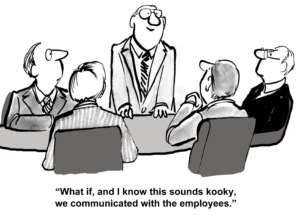
If you've been a doer (worker-bee) during your career, you need to ramp up your interpersonal communication skills. I've worked with and seen many C-Level people who are incredible at getting things done, but suck at getting people to help them. When you approach the big positions, it's less doing and more communicating. In fact, it hinges on evangelizing. You need to inspire the people around you and help you achieve your vision for the future. If you aren't communicating effectively, you will lose the troops who will make that happen.
Also, you should be speaking ALL THE TIME. Sample topic: Where will your type of marketing/industry be in 5/10 years?
Connections & Exposure
You should connect with key people in (and outside) of your organization. Connections are the currency of influence and success when you want to become a CMO. Marketing needs the assistance of every other department in your organization, so it's imperative that you develop critical connections to ensure a smooth flow of information, assistance, and resources. The more 'friends' you acquire, the more currency you have to spend when you need to lean on them for a favor.
Get out of your bubble. So many people tend to stay and communicate with the same 10 people regularly. You need to build your connections and get out and meet better tennis players who play better tennis.
I can go SO much deeper with each area - but I wanted to give you a brief intro on what you need to do to move up.
Great Tips From A Retained Recruiter.
I love Reddit. Many years ago, a retained recruiter hosted a huge 'AMA' (Ask Me Anything) post. They delivered great responses which were spot on. Here are some of the best (please disregard the grammar - I wanted to preserve the questions asked):
Deliver Life-Changing Presentations Every Time.
What would happen to your career if you gave life-changing presentations?
Some people love to give presentations. Some people hate it. Most people fall somewhere in between these two points on the presentation spectrum.
What do want to most from your presentation? A decision? Enthusiasm for a idea? A sale? A way to present bad numbers so they look good?
It could be a myriad of things — but all great presentations have a few critical areas where they excel — Purpose, Resonance, Enthusiasm, Experience, Narrative. Let's look at each one and how it impacts your presentation:
Purpose
I can't tell you how many presentations I've been to where two minute into the presenter speaking, I'm already lost. They've given me no semblance of what they will be covering and some basic waypoints to gauge where we are in the presentation.
How to fix: One of your first slides should cover a brief summary of what you will be speaking about and what you expect from the presentation. Something as simple as: "Today, I will be covering why we should begin to move all of our executives onto iPads. I'm going to cover the current state, impact, and desired state of our mobile systems." It's that easy.
Resonance
You are not reading out test scores — you're trying to sway your audience to feel for your position. So empathy and communication play large parts in how you give and relate your presentation to your audience. One definition of resonance is 'a quality of evoking a response'. Your job is to feel for your audience — understand how they are absorbing the information you're presenting.
How to fix: Keep scanning the audience — watch body language — see if they are engaged or distracted or puzzled. You'll know. If they are checking out — get them involved — ask questions of the audience. Ask for their opinion and get them to raise their hands. Also, move around — engage all parts of your audience — get down to their level.
Enthusiasm
Here's a little secret: All presentations are 90% Broadway. They're performances. Why? The more your audience is emotionally engaged in your presentation, the more likely they are to like it, take away key information, and tell others about it. If you just stand there and recite slides, they're going to check out, miss key information, and tell everyone you stunk.
How to fix: You are an evangelist of information. Live and breathe your info — get them excited about it too! Smile, raise and lower the tonality of your voice, and move your hands to make points. If you aren't excited about what you're speaking about, who will be?
Experience
You have to know your stuff. Many speakers get up and immediately venture down unchartered territory. When one errant question arises, they sudden fall silent or stumble with an answer. You have to know your topic cold.
How to fix: Keep your presentation on point — less is more. Stick to your topic and hammer all points of it — be prepared — anticipate most of the questions that will be asked. If you don't know something — say it: "Wow, that's a good question. I don't know, but I can find out. Let's talk after the presentation." It's that easy.
Narrative
Just spilling out facts will not help you with the other four areas. You have to relate stories - people LOVE stories.
How to fix: Tell stories. I usually incorporate at least 1-2 stories during a presentation. Make sure they stay on topic, are interesting or funny, and can be told in less than two minutes. Pick a situation in your career, someone who made a positive impact on you, or an item you found in your research.
POST YOUR QUESTIONS OR COMMENTS BELOW
P.S. If you’d like more information about how I deliver powerful presentations - Let’s talk. I’ve worked with thousands of executives and find this is a perfect way to start a coaching relationship — call or email me to schedule a complimentary session.