

ARTICLES
Written By Rich For You.
What Do I Need To Do To Move UP?
To your questions — broadly — one needs experience, knowledge, gravitas, tools, communication skills, connections and exposure to become a CMO. Let me cover each one and I'll include your questions:
Experience
You need a requisite amount of experience to become a CMO. It's not 'how many years', it's more about how many areas do you feel comfortable in the marketing arena? I come from a marketing background — you need creative, technical, statistical, client, financial and communication experience to make CMO. You need to know all the areas you will manage — so many newly minted CMO's who hit the top rung usually are lacking in many of these areas and it shows in their performance. I'm not saying you need to be an expert in all areas — although you should have leveraged each one during your career.
Knowledge
It's what you know. Where has the industry been and where is it going? What is your competition doing? Where has your company failed and succeeded? What CAN you do to move forward? Knowledge is power and when you're at the pinnacle of your organization, you need to have a adequate grounding in the past, present, and future of your industry. People will be looking up to you and it's imperative that you have a good base to lead them forward. Or, surround yourself with people who do.
Gravitas (Leadership)
Leadership happens instantly. You can't train for it — I can tell a novice a mile away by how they comport themselves in certain situations and with people. Guess what — your people can too. You need to clearly develop good leadership behaviors with positive engagement, enthusiasm, energy, and motivation. Unfortunately, gravitas comes with time — if you compare me with my 35 year old me, you will instantly see how cool, calm, and collected I am during critical situations.
Management Tools & Techniques
It's what you know. Most people aren't open to better ways of doing things. "I've done it this way for years" is the death knell of any job or business because something better or someone faster comes along. As with knowledge, you need to re-assess your toolbox of tool and techniques and see if they're still effective and motivating. Bottom line, as a CMO, you need to leverage many motivational, time-management, and process-driven skills to stay at the top and succeed.
Communication Skills
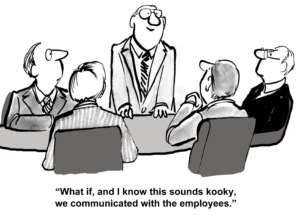
If you've been a doer (worker-bee) during your career, you need to ramp up your interpersonal communication skills. I've worked with and seen many C-Level people who are incredible at getting things done, but suck at getting people to help them. When you approach the big positions, it's less doing and more communicating. In fact, it hinges on evangelizing. You need to inspire the people around you and help you achieve your vision for the future. If you aren't communicating effectively, you will lose the troops who will make that happen.
Also, you should be speaking ALL THE TIME. Sample topic: Where will your type of marketing/industry be in 5/10 years?
Connections & Exposure
You should connect with key people in (and outside) of your organization. Connections are the currency of influence and success when you want to become a CMO. Marketing needs the assistance of every other department in your organization, so it's imperative that you develop critical connections to ensure a smooth flow of information, assistance, and resources. The more 'friends' you acquire, the more currency you have to spend when you need to lean on them for a favor.
Get out of your bubble. So many people tend to stay and communicate with the same 10 people regularly. You need to build your connections and get out and meet better tennis players who play better tennis.
I can go SO much deeper with each area - but I wanted to give you a brief intro on what you need to do to move up.
Top 10 Tools I Use To Work Anywhere.
I have a number of systems and tools to help me be my best at any time for my clients and also be able to boot up my office virtually — anywhere at anytime.
Ever since I left my corporate gig (so many years ago), I've had to modify my practice to work on the go and be 100% effective. I can't 'forget' anything, I can't carry around stacks of paper, and I certainly can't lose any important information.
What do I do? I have a number of systems and tools to help me be my best at any time for my clients and also be able to boot up my office virtually — anywhere at anytime:
1. Dropbox
Dropbox is a my online file manager which lets me store up to 100GB, plus it’s also a good way to sync my files across my various work and home computers and mobile devices. I can share files for collaboration, store and share photo and video galleries, and my data will all be safely backed up on Dropbox's secure servers. It connect seamlessly with my file manager, so it acts just like a hard drive — but it's virtual. And when a client needs a big file, I can grant them access to my Dropbox temporarily, let them grab the file, and then lock it down again. It's easy, cheap, and it's never failed me. Check out Dropbox.
2. Crashplan & iCloud
This is my online backup and as my tech team has instructed me, I should have it in two places. So I initially have all of my files regularly backed up to iCloud, Apple's proprietary cloud-based platform. It's transparent and I never notice it working in the background, surreptitiously copying my files and storing them offsite on one of their super-server farms somewhere in Utah. In addition, I use Crashplan, a continuous offsite backup platform with anywhere mobile app access. Even though both have been tested and proven, I have lived through file-loss and hard drive failures, so I have the scars. That's why I use two systems. Check out Crashplan & iCloud.
3. WD 1TB HD & 1TB Portable HD
Now let's move from virtual to actual hard drive backup. This is where I've earned all of my scars. Many years ago, I had an Iomega HD hooked to my laptop and thought the world was all pink and rosy. Then one day, it started to make a funny noise and suddenly, I couldn't access that drive anymore in file manager. All of my files and music were stored on that HD. It took three weeks and $600 to have a service recover most of the info and transfer it to DVD's. Never again. Today, I have two desktop 1TB hard drives from Western Digital (they come highly rated). Their redundancy allows me to ensure if one HD dies, the other has a mirror image at all times. In addition, I carry around a 1TB portable HD to hold many older files that cannot fit on my cherished MacBook Air. Check out my WD 1TB HD and 1TB Portable HD.
4. Macbook Air
My baby. This is the glue that holds my business together. Ever since I started my business, I've been on Apple products. Why? THEY DON'T BREAK. And if there is a problem, Apple is right there on the phone and at the store ready and willing to give me first-class service to fix it immediately. Why the Air? It is ungodly light — it's almost like my iPad. And since it has a 128GB SSD, it boots up within SECONDS. And it's scary fast too. Yes, there is a trade-off with graphics cards and HD space, but all of these weaknesses fall away when you pick it up and start working with it.
The 11-inch Air’s trackpad is still smooth, responsive, and easily the best in its class while the 13-inch display is brighter, clearer, and so vivid over ANY other laptop (other than the retina models). Battery life is phenomenal — I get at least 8 hours on a single charge, so I don't have to run around with my power cord all the time. Check out my Macbook Air.
5. iWork - Pages, Numbers, Keynote
These are the tools which make my business hum. For over 20 years, I worked on a PC and voraciously toiled with MS Office Word, Excel, and Powerpoint. They're great programs, but they're expensive and bloated. Honestly, looking back to my actual usage of each program, it was:
- Word - 30% - I did letters, newsletters, and one-sheet flyers. That's it. No mail-merge.
- Excel - 25% - I ran my financials and linked spreadsheets. But I was no CPA - no pivot tables, etc.
- Powerpoint - 100% - I ran this into the ground and used up all of its features.
Why did I move to iWork? First, it's much cheaper. iWork is $49.00 where MS Office used to run me $300-$400. And no bloatware - each module allows me to all that I could do with Office, but so much more.
- Pages - So much easier to use, the graphics look great, and there aren't a million items to choose from. Fonts are phenomenal and the template layout is easy to execute.
- Numbers - Think of it as Excel Lite. It's perfect for my practice - I never get into trouble and it's easy to develop a quick pie chart or graph for a presentation.
- Keynote - The real power-player of iWork. Hands down superior to Powerpoint - when I give presentations with Keynote, attendees flock to me and ask, "Who does your presentations? I've never seen them before."
Check out iWork.
6. Wordpress
This is the platform I use to run my website, blog to my readers, and get clients. It's robust, the leader in the industry, and it always has additional features to allow me to upgrade immediately. Not only that, it is so easy to use — logon, click 'New Post' and I'm off and running! I use the Thesis template and had Nurenu Brand Marketing design and build it. Check out Wordpress.
7. iPhone & IPad
Too much has been written on both the iPhone and iPad (and today you're probably going to see a lot more). But I use them EVERY day:
iPhone - this is my portable computer. I check it at least once every 10-15 minutes and I use over 70 apps to make my business and personal life easier. I've owned the original iPhone, the 3Gs, and now the 5. All three have been consummate workhorses and have allowed me to be the best coach I can be. Check out the Apple iPhone.
iPad - I use my iPad both as a personal tool (reading, surfing, movies, music) and a professional tool (presentations, training, blogging, email, etc.). Even though I have a Macbook Air, my iPad allows me to instantaneously access information and make decisions within seconds. It too has 60-70 key apps that help me navigate the web for info. Check out the Apple iPad.
8. Go To Webinar
This is my online tool to host my various Masterclasses (Get Tough!, and soon: Bulletproof Your Career & Accelerate Your Coaching Practice) and reach hundreds of members weekly. I can host teleconferences, webinars with presentations, or full video. It's reasonable ($99/month), reliable, and the interface is intuitive. Most competitors to GTW have terrible usability and are all but impossible to use — just ask anyone who uses these tools. Check out Go To Webinar.
9. Get Response
When I started my coaching practice, I used to send out PDF newsletters via email. What I started to find is a severe drop-off of readership because corporate mail servers began to interpret my emails as spam (even though their employees requested them). I had to turn to an automated service. Initially, for many years, I was with a cool service called Emma. They got the job done and their interface and look gave my messages a real elegance. Unfortunately, they became pricey if I wanted to send out multiple messages during a month. I then moved to Constant Contact. I found their interface and design wanting and ultimately realized they were nickel and dime-ing me for every little service. I then found Get Response. The perfect mix of Emma and Constant Contact — taking the best of both worlds and delivering them for less than $20 a month (and it has SO much more!). Check out Get Response.
10. Thule Crossover Sling Pack
I've been professionally working since 1984 and I've carried scores of briefcases, bags, backpacks, etc. back and forth to work. Lately, I've noticed many people pulling back on all the crap we carry and really culling down to what we really need to get the job done. That's why I bought the Thule Sling Pack. It's light, fits comfortably on my back, frees both hands if I need them, and holds ALL the stuff I need to be a traveling professional warrior. It has many pockets and is thoughtfully designed to organize all of the errant cables, pens, papers and electronics I carry. It's sitting on my table as I type (see photo). Check out the Thule Crossover Sling Pack.
Well . . . that's it. I hope you've enjoyed my extended post this morning and it gave you a little insight into the powerful tools I use to keep my practice running smoothly. If you have any questions about any of the tools I listed, feel free to contact me or leave a comment below (I LOVE comments!).
3 Tips To Take More Powerful Notes During Meetings.
The process of taking notes during meetings produces a number of pleasant side effects.
Meetings stink. You know you have to have them — status update meetings, quarterly reviews, client updates, investor relations, customer feedback sessions, etc. They stink because:
- They are usually not well run.
- They frequently go over their schedule.
- Work usually doesn’t get done — just talking/pontificating.
- It’s not all about you (probably the most important one).
One technique I use to combat "meeting-itus" is to take great notes. Stick with me.
The process of taking notes produces a number of pleasant side effects:
- You retain not only a mental record of the meeting, but also a physical one.
- You are engaged in the meeting, your mind doesn't drift off to other areas.
- You show your peers, customers, and superiors you value their time and input.
- It keeps your professional mind sharp at a time when you are might be drowsy and punchy.
- It delivers a jumping-off point for new ideas, strategies, and directions - which you can bring up during the meeting and look good.
But most people don't take good notes (or they don't take any at all). Usually because they still take notes like they did in school. Two different environments. So here are my three ways to take better notes:
Structure
A lot of executives use fancy and expensive leather books to take their notes. It's usually small, with a binding, and blank (or with lines). If you had to take a lot of notes, the physical structure of your book would probably work against you. Here's what I look for in a good note-taking platform:
- Ability to spread out - no bindings, large rings, or encumbrances to deal with. Nothing in the structure should impede my note-taking.
- Lots of space - don't use a 4" x 6" book - you need 8.5" x 11" to be able to draw, make arrow connections, and add/modify sections.
- You need to have some type of structure designed into the pages (see Format). These are usually flat.
Format
This is critical. Use my template (pdf) if you would like to see what I use. It's a simple format allowing me to list basic info at the top (date, meeting title, attendees) and adequate space between the lines to add graphics to my thoughts.
In addition, I have a 2" left-hand rail to allow me to list overall ideas, positions, and directions, so I can easily read down the left side of the page and understand what exactly happened during the meeting.
At the bottom, you'll see a large space for next steps or action items from the meeting. That's the most important part.
Behavior
Be engaged. When you sit down, prepare your notes — set the title, date, and attendees. There usually is a lead person who sets the stage for the meeting and hopefully delivers an agenda. This will give you a good idea of the purpose and structure of your time, hopefully well spent.
During each section (or person), break out each note area with a sub-title and think what's being covered, what are the elements, and what are the decisions/next steps. If you are tapped in any way to do something, make a defined, regular, and recognizable notation next to each element (I use two asterisks). This tells me I have something to do and to quickly inquire when it needs to be delivered.
What do you use to take your notes in? How successful are you in taking good notes? I would love to hear your techniques!
Tools That Help Me Perform At 100%.
I am frequently asked about many of the tools I use in my practice. Just a word of warning, this post is definitely not a 'static' list — these tools do change in capability, size and manufacturer.
I am frequently asked about many of the tools I use in my practice. Just a word of warning, this post is definitely not a 'static' list — these tools do change in capability, size and manufacturer. HEADS UP: If you see a tool I'm missing or one you think is better — let me know in the comments at the bottom of this page. Here we go:
Hardware
Macbook Air: This is MY BABY. I learned on a Macintosh back in the 80's and then spent 20 long years with PC's in corporate. When I started my practice, I immediately moved to Apple. Best decision I ever made. They rarely break or have problems and help is only a phone call or visit away. It's small (13") and thin — but perfect to carry when I travel. (link)
HannsG 27" Monitor: All of us are getting older every year — don't ever skimp on your vision. It's big and has great color — and it just works! Yes I could have bought the Apple Monitor, but it's an additional $800 — and I'm not a graphics person — I'm not picky. (link)
iPhone: I have this wherever I go — even in the shower. When I don't need my Air, my iPhone delivers EVERYTHING I need to stay connected to my office, assistant, and my clients. I just moved from the 3GS to the 5 and I can't be happier! It's the best of the best and at $199 — it's a steal. (link)
iPad: Is this overkill with my Air and iPhone? Not at all. I use it to give demonstrations to small groups or presentations one-on-one with my clients. It boots up instantly and is connected to all of my files. In addition, my family uses it all the time for reading, checking news, and playing games. Guess what Santa is going to bring down the chimney this year? (link)
Western Digital My Passport 1TB: I need this because I only have 128GB of space on my Air. I connect to it daily and have it encased in a CaseLogic case (link) — but it's vital to keep all of my current and old files ready to access. (link)
Western Digital 1 TB: This is my backup — using Time Machine and SuperDuper, I had it partitioned so I have two different images of the same hard drive on my Air. I also keep all my music on it too. (link)
Brother HL-2270DW Printer: This is my workhorse — my $99 B&W printer that pounds out anything I need printed (less and less every day) — but it's there, it works, and it delivers. On paper, labels, cards . . . anything. (link)
Plantronics Headsets: I have two headsets — one for my direct coaching line (link) and for Skype/Webinars (link). They are expensive ($250+) — but they WORK. And I never have any audio issues with them.
Bindertek Binders: American binders STINK. How many times does your 3-ring binder stick, get caught on paper, or just break? Bindertek is the European solution that has been around for decades. 2 rings are better than 3. Trust me — you'll love them. (link)
Thule SlingBack: For many years, I carried around a number of briefcases — all the way from a 007 hard Samsonite case to a Lands End canvas bag to a Ogio computer bag. I realized the bigger they are, the more crap I carry in them. So I culled myself down to a Thule and I've never looked back. And it allows me to have two hands free! (link)
Software
iCloud: This brings everything together — my iPhone, Air, iPad, and all of my files, music, movies, etc. I know — some of you diehards don't believe in it. But it's worked perfectly for me so far. It keeps all of my files synced (my calendar, contacts and email too!) perfectly — and it's easy to use too. (link)
MacMail: I know, I should use Gmail, but MacMail just works. It's clean and it does EXACTLY what I need it to do without all the bells and whistles. It allows me to archive past emails and access them instantly. I love it. (link)
iCal: This is my lifeline for my business — it allows me to color-code all of my appointments, attach tasks/activities, and save for eternity. (link)
iWork: Keynote, Pages, Numbers — my final Apple entry — but clearly a favorite of mine. I was brought up on Word (too big), Excel (too complex at times), and Powerpoint (my one true love). When Apple introduced iWork, I was intrigued that they had taken the very best of every tool and made them better (and in Keynote's situation — much, much better). I don't need to do mail merges or pivot tables — so I use Pages and Numbers. But for ALL of my presentations — I use Keynote. And the audiences respond and constantly ask, "What presentation software do you use?" Or even better, "Who professionally made your presentation?" (link)
Wordpress: This entire site is constructed within Wordpress — it has REVOLUTIONIZED the way I market and communicate on the web. I have total control of what goes where AND posting new blogs items are super simple. If your site isn't in Wordpress, you are missing out on something BIG. (link)
Dropbox: I worry A LOT. Especially about important files and the ability to access them instantly. Dropbox allows me to easily 'drop' important files, archive key blocks of info, and access them anywhere — on my mac, my iPhone, or iPad — or even at an outside PC. And it just works. (link)
Evernote: Ever read something on the web and forget where it is? Or want to save a PDF for later reading or dissemination? Or a myriad of other things? Evernote is the answer. (link)
Pixelmator: I have an eye for graphics but I'm not as talented as a graphic designer. But I do have a need to do slightly complex techniques on images or build logos for my products. And I don't want to spend $600-$800 on Adobe Illustrator or Photoshop. This is where Pixelmator comes in — it's a full function image tool which allows you to modify photos or text in many ways. It's intuitive and it just works. (link)