

ARTICLES
Written By Rich For You.
How Do Busy Leaders Make More Time?
One of my clients sent me their daily schedule. I was so blown away by it's simplicity and it's ability to fit many professional and personal things in — I just had to publish it for my audience. In their own words: "I want to put myself on a schedule. I need a schedule where I meditate 2x per day, exercise, have ample time for self-education and time to relax."
- 5:00 AM - Get Up.
- 5:00 to 6:00 AM — Meditate for 20 minutes, Walk for 30 minutes, Lift weights for 10 minutes.
- 6:00 to 6:30 AM — Eat Breakfast, Coffee.
- 6:30 to 7:30 AM — Self-Education.
- 7:30 to 8:30 AM — Get Ready for work.
- 8:30 to 9:00 AM — Drive to work, Listen to Audiobooks/Podcasts.
- 9:00 to 5:00 PM — Work.
- 5:00 to 5:30 PM — Drive home, Listen to Audiobooks/Podcasts.
- 5:30 to 6:00 PM — Meditate.
- 6:00 to 7:00 PM — Cook & Eat Dinner.
- 7:00 to 8:30 PM — Self-Education.
- 8:30 to 9:00 PM — Ready for Bed.
- 9:00 to 10:00 PM — Relax, Read, Watch TV.
- 10:00 PM — Go To Bed.
My client is a successful senior executive at a prestigious company who has accomplished a lot and has been gainfully employed and promoted regularly. They're not a slacker.
As you can see, they get it all done in a relaxed schedule, allocating adequate time for all of their activities. Of course there might be subtle deviations due to travel, emergencies, and unplanned activities, but for the most part, they stick to this plan.
So for all the people out there who say they "don't have the time" — Yes, You DO.
Build The Best Standing Desk For Your Office.
When I first started working in retail many years ago, our job demanded we stand eight hours a day — Bloomingdales, Koenig's, Caldors, The Video Station, Waldenbooks — they all had us standing and walking around the store. And I never complained. Then I got into the 'big time' and for the the next 15-20 years, worked in corporate at a desk. When I started coaching, I built a huge desk out of birch plywood — it was beautiful — but I still sat for most of the day.
Lately, I've been reading about the healthy aspects of standing desks and learned about all the attributes of standing: better posture, more active, easy to reach items, etc. In addition, I tend to walk around while I coach because I feel it adds to the experience and allows me to think and communicate more clearly.
Unfortunately, standing desks are EXPENSIVE! They run into the thousands. I then ran into the Ikea Hackers site, where they take ordinary Ikea furniture and modify it into different designs. So I modified a few designs and came up with the standing desk you see at the top of the page. How did I do it? Here are the 'ingredients':


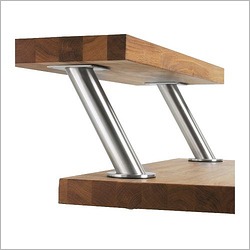
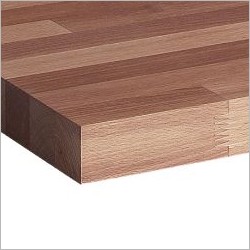


What were the results?
- It was a LOT cheaper to build than to buy. In addition, it's all wood and steel. It looks great.
- It was super-simple to construct. Just a drill, my 13-year-old son, and about 2 hours.
- I now have more room on my desk. I'm more organized and I keep the desktop clean.
- I feel better. Standing all day at first hurt a bit, but now I would NEVER go back.
- I no longer have to switch from standing-to sitting-to standing when coaching clients.
As you can tell from the finished desk image, I've also added a few drawers ($20 each) to the Kallax Bookshelf. I might even add more!
If you are interested in building a standing desk, drop me a line (richgee@richgee.com) or call - 203-500-2421. Would love to answer any questions you might have.
I have become a standing desk evangelist!
All images are from IKEA promoting their products. I love IKEA, their store, their service and all that they do. Check them out.
Three Secrets Presentation Pros Keep To Themselves.
Shhh. It's a secret. Don't tell anyone.
To be honest, there are times when I'm scared. Not the 'horror movie, the zombie is coming after me scared' — more like the 'I've been pushed WAY out of my comfort zone' scared. A few weeks ago, I was asked by a Fortune 50 organization to speak to a group of their employees — a small group, say 50-100 people. No problem — I've done it before. As the date moved ever closer, the attendance figures rose to 200, 300 until I walked into the building and found out we were looking at 750-800 attendees (for the auditorium and streamed via webinar). Oh my.
The main reason why there was a dramatic attendance jump was directly attributable to the title and topic of my talk: "Bulletproof Your Career". To say the least, I had to pull every bit of speaker experience out of my being and ensure my time on stage wow'ed the audience. During this entire process, I used three 'secrets' to allow me to knock it out of the park (afterward, I was told my evaluation score was 98% — one of the best they've ever seen).
So here they are:
1. Prepare, Prepare, Prepare
I couldn't have walked on stage in front of all those people without being 100% sure of my presentation and the logistics behind the presentation. First off, I spend a lot of time constructing the presentation. I have a rare form of presentation ADD, so when I build every slide deck, I tend to instantly edit, modify, and move things around because I get bored easily. I then run through the slides standing up, looking at my screen with my remote — to see how each slide runs into the next and I instantly feel the flow. Honestly, I do it a number of times until I get it right.
I also show up to the venue at least two hours ahead of time. I ensure I'm at the location (so I'm not late), I meet with the AV crew and connect my presentation to their machinery and I get a feel for the stage — I walk around, test the mic, see if there are any obstacles that might trip me up. Everything has to be PERFECT — and we have more than enough time to make it all happen. These little things all build my confidence and banish all the worries we all have prior to a presentation.
I also ask many questions prior to the event to get a better feel for my audience. Who will be there? What information do they need? Where are their heads at right now? All of these activities ensure I will deliver my best for all of my clients.
2. Simple, Clear, Concise
This is the hardest secret for presenters to stick to — keeping their message simple, clear and concise. They tend to over-complexify their presentation with a million slides, too much info on each slide, too many bullets (I hate bullets), etc. It almost becomes a treasure hunt for the audience where the presenter has buried the treasure and the audience has to find (decipher) it.
My slides always have one of two things: an image which dominates the slide or words which make up a simple phrase. That's it. Too many times, I see presenters go WAY overboard by adding too much information to the slide. They're not only hurting themselves (the audience checks out at a certain point) but their are obfuscating their message.
LESS IS MORE. Use your slides as illustrations to your verbal speaking points. You want your audience to spend the majority of their time looking at you, glancing at the slide, and then back to you. You don't want them READING each point — then they don't need you AND you lose the power and presence of a presenter instantly.
3. Pick It Up, Power It Down
Modulate your presentation — most speakers don't do this — they stay at the same volume, the same tonality, and the same rhythm during the entire presentation.
Mix it up! Jump on stage and greet your audience — unless you're a star and your reputation precedes you, every speaker needs to transfer their excitement and energy to the audience. The easiest way to do that is to greet everyone with a huge "Good Morning". First impressions impact your entire presentation.
Start out strong and let them know what they're in for — give them a brief overview of what your're going to cover. Tell them a story — get them excited about true instances which bring your points to life.
Power it down to make a point — get them to focus — but then bring it back up by asking a question or make a self-depreciating comment to make them laugh. Whatever you choose, keep the rhythm moving, unexpected, go up and down in tonality. This is not a world affairs forum and you are not expounding on the economics of third-world countries — you are informing, entertaining and engaging your audience. Make it a celebration!
POST YOUR QUESTIONS OR COMMENTS BELOW
13 Simple Tips To Get Highly-Qualified Referrals.
When you run your own business, it's hard to keep the sales funnel healthy and moving with new referrals, prospect and hopefully, clients! Most people forget about REFERRALS. Why?
- You hate to ask for things from other people.
- You don't want to come off as someone who NEEDS referrals.
- You know it sounds like begging for clients.
- And many, many others.
Bottom line — to run a successful business, you need constant and regular referrals.
To get those . . . YOU NEED TO ASK FOR REFERRALS.
I've linked to one of my most requested articles: Get Referrals NOW™ — 13 simple steps to start a referral flood to your business.
Each of the 13 steps have a dedicated action item to get you on your way to highly qualified and powerful referrals.
Some of the best steps:
- Review your past referrals.
- Be referable.
- Train your troops.
- Reward your referrers.
This report will radically change your 2013 business.
Check it out HERE.
Top Posts for April 2012.
My most-read posts for April - come see!
Okay, I posted one day early this month, so sue me. In case you missed them, here are my top ten posts for April 2012:
- How To Stop Working So Late – Part One. 789 views
- The Ten Commandments Of Leadership. 549 views
- Two Questions That Will Change Your Life In A Powerful Way. 478 views
- How To Stop Working So Late – Part Two. 441 views
- Three Secrets Presentation Pros Keep To Themselves. 428 views
- 4 Tips To Say “NO” and Make It Stick. 330 views
- 3 Simple Rules In Life. 243 views
- Top Five Regrets of the Dying. 235 views
- Two People To Keep Your Eye On At Work. 231 views
- When Your Company Throws You A Left Hook To The Chin. 210 views
I want to thank all of my readers who made April the biggest (most visited) month ever for my site. I really appreciate all of the visits and most of all telling other people about my site. It means a lot to me.
If you get a chance, please forward your favorite to someone else you know. Thank you!
Which post really resonated with you?
Stay in touch — I love your feedback! Keep it coming. Regards - Rich
3 Ways To Successfully Attain Any Goal In Life.
You have grand designs on your future - unfortunately, you never meet your personal or professional goals. Why does that happen?
 You have grand designs on your future - unfortunately, you never meet your personal or professional goals. Why does that happen?
It comes down to three areas - SRS or Simple — Realistic — Steps (not five, as in SMART, or seven as in SMARTER - let's keep it simple!).
You have grand designs on your future - unfortunately, you never meet your personal or professional goals. Why does that happen?
It comes down to three areas - SRS or Simple — Realistic — Steps (not five, as in SMART, or seven as in SMARTER - let's keep it simple!).
What do I mean?
1. Simple - Keep your dreams simple. Don't make them too complex. If you do, you'll find you will be spending more time deciphering what to do next and questioning if you did it to completion. Simplicity is key. Also break out the goal into smaller, more attainable goals (see #3).
2. Realistic - Be honest to yourself and pick those goals that you can actually achieve. So many people go off half-cocked and attempt something grandiose or unattainable by any measure and then find themselves cashing in again on a failed project, initiative, or life goal. Then they get frustrated and angry. And they never try anything again.
3. Steps - Chunk out each goal into simple and realistic tasks or activities. In addition, look at your goal, if it is too big or unwieldy, break it up into manageable steps. An example might be, "I want to own a BMW Z4 sports car". Normal steps might be save money, research best way to purchase, buy car. A better way to break up your steps would be to have three segmented goals (with sub-goals) that build up to your main goal, ownership of the Z4:
- Finance - a. Ensure constant stream of revenue to pay all bills and have extra left over. b. Investigate a general financial goal for the Z4. c. Develop a time/payment schedule to save. d. Ensure that no unplanned emergencies arise to deplete the Z4 funding machine. e. Find a profitable 'holding area' for the funds saved that will deliver the best interest. f. Ensure your credit score remains high to garner the best interest rate deal. g. Set up goal markers to check off during this process.
- Research - a. Why do you want a Z4? b. Investigate alternatives to the Z4 - cheaper, better, other brands. c. What are the best dealerships? d. Who are the best salespeople that can educate you on the Z4 and get you the best price? e. How much will insurance be? f. What is the resale value? g. Lease or buy? h. Return policies? Warranties? i. Set up goal markers to check off during this process.
- Purchase - a. When are the Finance and Research steps complete? b. Initiate the finance process. c. Plan for any hiccups in the process. d. Sell your current car. e. Make a list of items to check when you sign the papers and pick up the car. f. Set up goal markers to check off during this process.
This is an over-simplified example to show how you can chunk out each step to cover any issue or problem that might arise, but also to move you forward during the process, making each step simple, manageable and motivational, ensuring your success.