The Multi-Triangulation of Compensation

The idea that "hard work equals more money" is one of the biggest fairy tales in the corporate world.
If you think putting in 60-hour weeks, grinding through weekends, and sweating over your
keyboard automatically entitles you to a larger slice of the pie, you are playing a game that
doesn't exist. Hard work is the baseline. It keeps you from getting fired. It does not dictate your
compensation.
Your salary is not a merit badge for effort. It is the output of a complex, often invisible algorithm your manager runs behind closed doors. I call it the multi-triangulation of compensation.
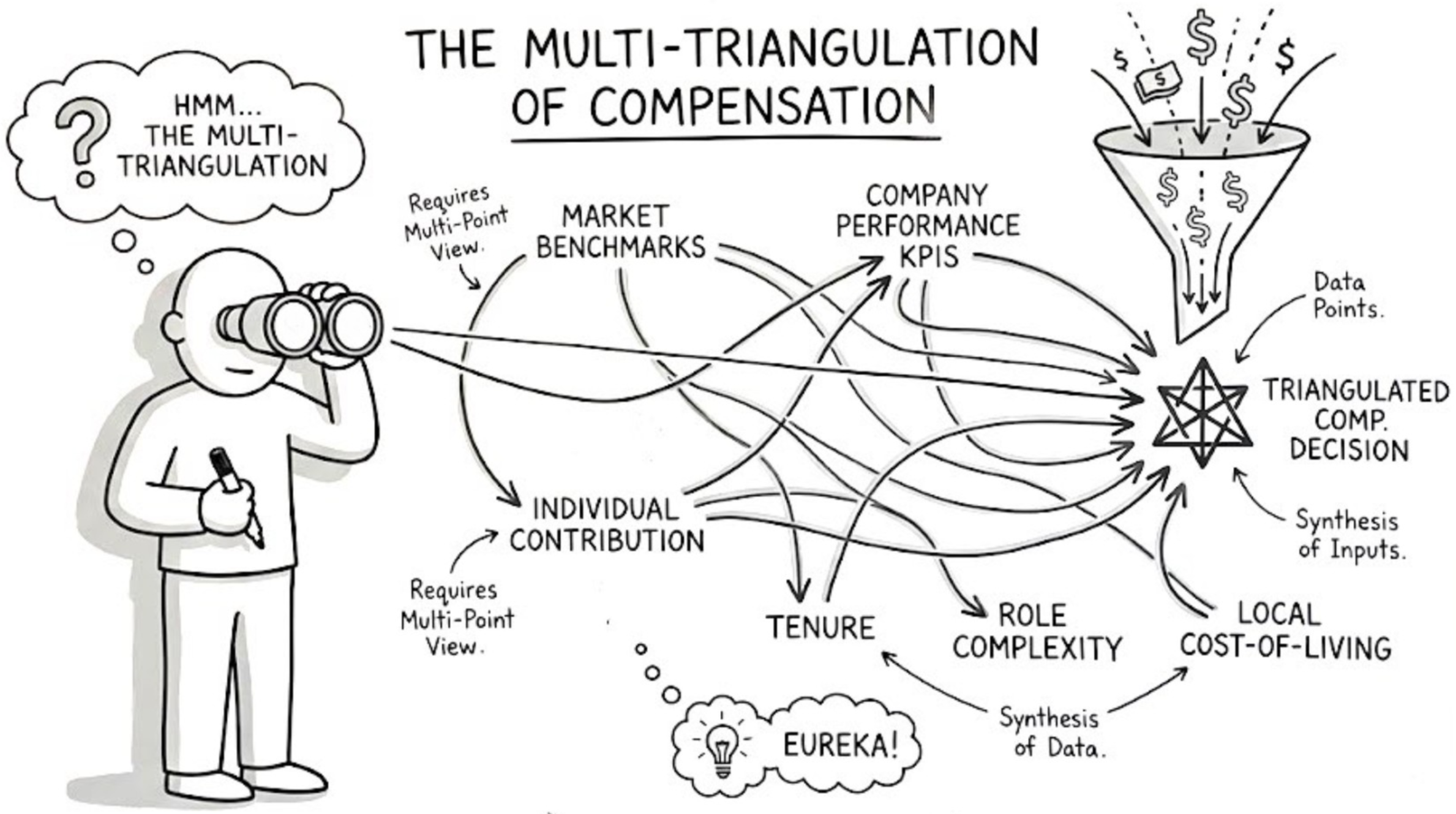
When your boss is sitting in a room looking at a spreadsheet of merit increases, they are
balancing leverage, perception, and corporate bureaucracy. Here is what they are actually
taking into consideration:
The Friction of Replacement: How much operational pain will they suffer if you walk out
the door tomorrow? If they can replace you with someone 20% cheaper in two weeks, your
leverage is zero.
The Likability Factor: Let's be ruthless—managers advocate for people they like and
appreciate. If you are a high performer but a massive pain to manage, your boss will
subconsciously cap your pay to avoid rewarding your behavior.
Actual Bottom-Line Impact: Did your work make the company money, save the company
money, or mitigate a massive risk? "I worked really hard on this deck" means nothing. "This
deck closed a $500k account" means everything.
The Health of the Business: You could be the best player on the team, but if the
department's budget is bleeding out, or the company missed its quarterly targets, the well is
dry.
The Manager's Political Capital: To get you a significant bump, your manager has to go to
their boss and spend political capital. Do they have the relationship, the track record, and
the spine to fight for you?
HR's Stranglehold: Human Resources operates on salary bands, equity caps, and internal
parity constraints. Your manager might want to give you a 15% raise, but HR will block it to
prevent "market misalignment."
The Domino Effect (Peer Parity): Your boss knows that if they give you a massive bump, it
leaks. They are calculating: If I give this to you, do I have to give it to the other three people at
your level?
Future Runway: Are you capping out in your current role, or are they grooming you for
leadership? Compensation is often a retention tool for future value, not a reward for past
performance.
If you are only focusing on the output of your daily tasks, you are blind to 80% of the board. So, what do you do about it? You stop complaining about fairness, and you start playing the actual game.
Your Action Plan
1. Speak the Language of Money
Stop tracking your hours and start tracking your impact. When you sit down for a compensation discussion, do not talk about how hard you worked. Bring a documented list of how your specific actions drove revenue, cut costs, or streamlined operations. Draw a straight line from your desk to the company's bank account.
2. Arm Your Boss for the Fight
Your manager has to justify your raise to HR and their boss. Do not make them do the homework. Build the business case for them. Give them the data, the market research, and the performance metrics so that when HR pushes back, your boss has the exact ammunition needed to win the argument.
3. Deliberately Increase Your Replacement Cost
Become the bottleneck for something critical. Own a client relationship, master a proprietary
system, or become the only person who knows how to navigate a specific regulatory headache.
When your manager runs the calculus of you leaving, the thought needs to give them a
migraine.
4. Audit Your Relationship Capital
Look in the mirror. Are you high-maintenance? Do you complain constantly? Do you create
fires your boss has to put out? If you are a drag on your manager's energy, they will not fight
for you. Be the person who solves problems before they reach their desk. Make their life easier,
and they will want to keep you around.
5. Read the Macro Environment
Timing is everything. If the company just announced layoffs or missed earnings, do not ask for a raise. You will look completely out of touch with the business reality. Wait for a win—either yours, your department's, or the company's—and ask when the iron is hot.
If you want to get paid, stop acting like a worker bee waiting for a gold star and start acting like a business of one. But in the end, go and ask for more money if you deserve it. Today.