ARTICLES
Written By Rich For You.
1Q11 - What Have You Done So Far?
It's the end of the first quarter of 2011. Three months, 90 days . . . what have you accomplished? This is a great time to look back and review what you did, what went right, and what went wrong. Time to measure, monitor and regroup for the next 90 days. Ask yourself:
It's the end of the first quarter of 2011. Three months, 90 days . . . what have you accomplished? This is a great time to look back and review what you did — what went right and what went wrong. Time to measure, monitor and regroup for the next 90 days. Ask yourself:
- What was the biggest thing you accomplished?
- What made the biggest impact?
- Who did I meet and how did they change my business?
- How many clients did you close? Did you lose any? Fire any?
- How much money did you bring in?
- What did you learn?
- Where do you go next?
- Why did I do those stupid things? (my favorite)
I love the end of quarters — it allows me to hone in on what I accomplished, where I dropped the ball, and what I have to do next to accelerate the whole bailiwick.
If you don't do it, someone else will.
How do you monitor and measure yourself?
10 Tips For Holiday Party Etiquette.
It's the most wonderful time of the year. And you have to go to your office holiday party. Here are some simple tips to make it much more bearable and hopefully, wildly successful.
- Dress up. Remember, this is a party, so dress up a bit to show off. Wear that snazzy tie or that elegant scarf. Jewelry is a must. This is the time to step out and be noticed — but don't go too overboard. No santa ties, plunging necklines, or revealing dresses. But do dress up.
- Be On Time. Don't be early or late — show up 30-45 minutes after the start time. Gauge the parking lot — step in when there is a reasonable amount of people.
- Two Drinks Max. Don't imbibe the liquor too much — this is ample networking time — you need to reach out, meet and greet new people. Switch to soda or juice to keep the fluids going - you'll be talking a lot.
- Don't Nosh Too Much. You want to eat, but not too much. Try to stick to the foods that are quickly eaten with a minimum of mess and utensils (no chicken wings). If you can, hit the restroom immediately after to check for any errant bits of spinach between the teeth.
- Have a Wingman. Either bring a date or someone who will compliment your presence at the party. A person who will keep the conversation flowing but not take over the entire group. The ability to play off of one another only makes the conversation that much more lively.
- Mingle. Don't spend all your time with your peeps. This is the time to connect with influential people that might help your career. Engage them in conversation that will take them away from work and drift into interests and hobbies.
- Don't Spend All Your Time Gossiping. Keep the talk light and personal (again, interests, hobbies, kids, etc.). If you have to talk business (taking cues from your boss), talk about what the company accomplished and what could be planned for 2011. Talk future business. If you have some cool ideas, test pitching them — but don't go too far. You should know when to pull back on the rudder.
- Thank Your Boss. Make sure that you make your way over to the boss and thank them for the shindig. Also thank them for their guidance, assistance, and patience over the past year — this will endear you to them.
- Leave Before It Ends. Don't be the guest who wouldn't leave. Make sure you do the rounds of management and your team, but leave before the last person walks out the door — preferably 30 minutes before the stated end of the party. Give your regrets and make haste out the door.
- Have FUN. This is a time to test and hone your connecting, social, and political skills. You need to show people that you can move within social (who you know) and political (who knows you) circles. But most of all, smile and enjoy!
Two Videos: One Will Impact Your Life & One Your Work.
Rarely do I log onto one of my favorite sites (reddit.com) and find two great videos I have to share. So in honor of the day after Thanksgiving, where we all take a collective sigh of relief and relax (except for those who are braving our stores). Enjoy!
Rarely do I log onto one of my favorite sites (reddit.com) and find two great videos I have to share. So in honor of the day after Thanksgiving, where we all take a collective sigh of relief and relax (except for those who are braving our stores).
Enjoy!
Thank You Bethel Library!
Thank you again for attending our workshop Tuesday night! We had a packed house and based on the feedback, everyone had a powerful experience.
First off, a big thank you to Susan and Kate — the consummate hosts at the Bethel Library. What a great venue and what a great library — I will be stopping by there more often to peruse their books and research material!
As promised, here are the links to access the full presentation and the article Rich & Margo mentioned. We hope you enjoy using them to accelerate your job search:
Get Tough - The Best Jobs Are Never Advertised™ — Full Presentation (13mb)
The Best Jobs Are Never Advertised — Step-By-Step Article (1mb)
By the way, if you have changed your mind and would like to learn more about the Get Tough Intensive, don't hesitate — give us a call:
Margo - 203.857.0261 Rich - 203.500.2421
Otherwise - Enjoy the holidays and we hope you have an unbelievable 2011!
Regards - Margo Meeker & Rich Gee
The International Coaching Federation Welcomes Rich Gee.
UNBELIVABLE. I had a great time Friday morning presenting to a packed crowd at the Connecticut Chapter of the International Coaching Federation. I was blown away with the attendance of so many powerful peers in the industry, all looking to collaborate and learn how to leverage our craft more effectively in this changing marketplace — it's nice to present to a group I know I can help.
Incredible.
I had a great time Friday morning presenting to a packed crowd at the Connecticut Chapter of the International Coaching Federation. I was blown away with the attendance of so many powerful peers in the industry, all looking to collaborate and learn how to leverage our craft more effectively in this changing marketplace — it's nice to present to a group I know I can help.
Based on the feedback I received via my evaluation forms, everyone had a powerful experience.
First off, a big 'thank you' to the entire ICF committee. I run workshops all across the country in many venues — they were the perfect hosts (they covered ALL the bases), the location was smashing (I love the Doubletree Hotel - it was just renovated), the room was perfect, the food scrumptious, and any request was met with a smile. Kudos!
As promised, here are the links to access the full presentation and the sites I mentioned:
- Market Yourself To Success — Full Presentation (13mb - might take a bit to download)
- Business Cards - Moo.com or 4by6.com (tell them Rich Gee sent you)
- Virtual Office - Regus.com
- Website Company Who Built My Wordpress Site - Nurenu.com (tell BJ Flagg you were sent by Rich Gee)
- Wordpress - www.wordpress.com
- Template for my Wordpress Site - Thesis
- PR Professional - Ron Magas at Magas Media Consultants, LLC - www.magasmedia.com (tell Ron you were sent by Rich Gee)
- BNI - CT Chapter - www.bnict.com
- Credit Card Payments - www.paypal.com (look for Virtual Terminal)
- Professional Voice Mail Recordings - www.provoicegreetings.com
- Matt Harding Video (big hit!) - Click Here
- My Current Workshop Schedule - Click Here
Enjoy the rest of November and hope to see you again! - Rich
P.S. Books That I Recommend to businesses nationwide:
Want To Be Successful? This Is What You Do.
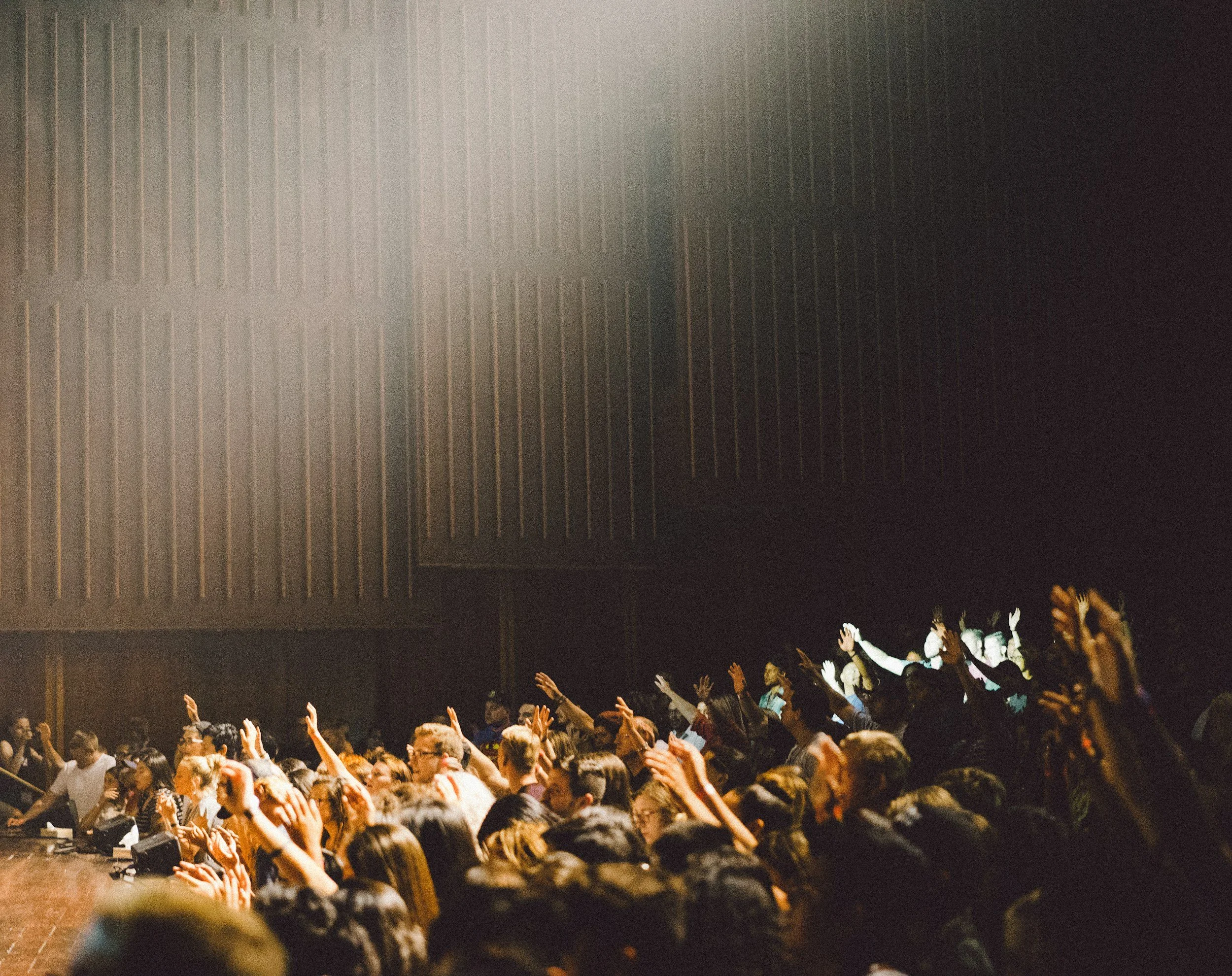
This morning, I'm speaking in front of 100+ people at the Wilton Library on LinkedIn. Candidly, I'm not a true 'authority' on LinkedIn, but it does help my business, and I'm presenting to business owners about how they can leverage it too.

This morning, I'm speaking in front of a packed crowd at the Wilton Library on LinkedIn.
Candidly, I'm not a true 'authority' on LinkedIn, but it does help my business, and I'm presenting to business owners about how they can leverage it too.
So you want to be successful? Want to make mid-to-high six figures a year? Learn how to speak in front of people. And get good at it. It takes practice — but once you have the correct formula of presence, information, and broadway — it works.
I'm not saying that speaking is the end-all of business, it's a tool to be used to help grow your business. The more people that you are in front of and can experience your service, the more that they actually sell themselves.
Why? Speakers are at the apex of communication. Of course we have writers and actors. We also have social media. But public speaking is one of the most powerful forms of communication today. Why?
- You instantly become an authority. People still respect professionals who speak and take the information they provide at face value. Try doing that in any other medium.
- You are a billboard for you and your company. Standing up and speaking on a topic commands respect — for you and your product. It's free advertising that actually works.
- You move people with your words. You touch their heartstrings. I've had people come up to me after a keynote or workshop and hug me. You don't get that from a Tweet.
- You get true two-way communication. Attendees can meet and touch you. They can ask questions and have your personalize your response to their situation. That's special today.
- You can guide them to other products you offer. Since they have already bought into you, they are usually very interested in extending the experience by purchasing more of your services. Your here to make MONEY.
So if you want to be truly successful — learn, practice and perfect your speaking style. Today.
Buffett Predicts Bright Economic Future.
Famed investor Warren Buffett declared that the country and world will not fall back into the grips of the recession.
"I am a huge bull on this country. We are not going to have a double-dip recession at all," said Buffett, chairman of Omaha, Neb.-based Berkshire Hathaway Inc. "I see our businesses coming back across the board."
Buffett said the same things that worked for the country through a century of two world wars, a depression and more – all while increasing the standard of living – will work again. He said banks are lending money again, businesses are hiring employees and he expects the economy to come back stronger than ever.
"This country works," Buffett said during a question-and-answer session via video at the Montana Economic Development Summit. "The best is yet to come."
By Matt Gouras at The Huffington Post
The CEO Revolving Door Keeps Spinning . . .
From the "WOW - That didn't take long" department: "Former Merrill Lynch CEO John Thain is taking over as chairman and CEO of CIT Group as the commercial lender continues to restructure its business following a brief stay in bankruptcy protection last year.
From the "WOW - That didn't take long" department:
"Former Merrill Lynch CEO John Thain is taking over as chairman and CEO of CIT Group as the commercial lender continues to restructure its business following a brief stay in bankruptcy protection last year.
As chairman and CEO of Merrill Lynch, Thain came under fire for having paid out $3.6 billion in bonuses to Merrill employees just before a BOA deal closed, and for spending more than $1 million to redecorate his office at Merrill, despite its massive losses.
CIT Group Inc., one of the nation's largest lenders to small and mid-sized businesses, said Thain will take the helm immediately. The 54-year-old replaces acting interim CEO Peter J. Tobin, who will remain on CIT's board. Tobin had stepped in while CIT searched for a permanent replacement for Jeffrey Peek, who retired as chairman and CEO on Jan. 15. President and Chief Operating Officer Alexander T. Mason, 58, is leaving the company Feb. 26. Chief Financial Officer Joseph Leone has said he plans to retire in April."
Looks like the rats are jumping ship and one huge rat is coming aboard.
How do they do it? Would love your comments . . .
America's "Can't-Do" List.
Lately, I've been studying the melting of glaciers in the greater Himalayas. Understanding the cascading effects of the slow-motion downsizing of one of the planet's most magnificent landforms has, to put it politely, left me dispirited.
By Orville Schell at The Los Angeles Times.
It is impossible to focus on those Himalayan highlands without realizing that something that once seemed immutable and eternal has become vulnerable, even perishable. Those magnificent glaciers are wasting away on an overheated planet, and no one knows what to do about it.
Another tipping point has also been on my mind lately, and it's left me no less melancholy. In this case, the threat is to my own country, the United States. We Americans too seem to have passed a tipping point. Like the glaciers of the high Himalaya, long-familiar aspects of our nation are beginning to seem as if they are, in a sense, melting away.
In the last few months, as I've roamed the world from San Francisco to Copenhagen to Beijing to Dubai, I've taken to keeping a double- entry list of what works and what doesn't, country by country. Unfortunately, it's become largely a list of what works elsewhere but doesn't work here. In places such as China, South Korea, Sweden, Holland, Switzerland and (until recently) the United Arab Emirates, you find people hard at work on the challenges of education, transportation, energy and the environment. In these places, one feels the kind of hopefulness and can-do optimism that used to abound in the United States.
China, a country I've visited more than 100 times since 1975, elicits an especially complicated set of feelings in me. Its Leninist government doesn't always live up to Western ideals on such things as political transparency, the rule of law, human rights and democracy. And yet it has managed to conjure an economic miracle. In China today, you feel an unmistakable sense of energy and optimism in the air that, believe me, is bittersweet for an American pondering why the regenerative powers of his own country have gone missing.
As I've traveled from China's gleaming, efficient airports to our often-chaotic and broken-down versions of the same, or ridden on Europe's high-speed trains that so sharply contrast with our clunky, slowly vanishing passenger rail system, I keep expanding my list of what works here at home and what doesn't.
Over time, the list's entries have fallen into three categories. There are things that are robust and growing, replete with promise, the envy of the world. Then there are those things that are still alive and kicking but are precariously balanced between growth and decline. Finally, there are those things that are irredeemably broken.
Here is the score card as I see it:
Aspects of U.S. life that are still vigorous and filled with potential:
- , which is delivering much of the world's most innovative research and ideas.
- Silicon Valley, which has enormous inventiveness, energy and capital at its disposal.
- Civil society, which, despite the collapse of the economy, seems to be luring the best and brightest young people, and superbly performs the crucial function of goading government and other institutions.
- American philanthropy, which is the most evolved, well funded and innovative in the world.
- The U.S. military, the best-led, -trained and -equipped on the planet, despite being repeatedly thrust into hopeless wars by stupid politicians.
- The spirit and cohesiveness of small-town American life.
- The arts, including our film industry, which remains the globe's sole superpower of entertainment, along with the requisite networks of orchestras, ballet companies, theaters, pop music groups and world-class museums.
Aspects of U.S. life that still function but need help:
- Higher and secondary school education, in which America boasts some of the globe's preeminent institutions. Increasingly, though, many of the best institutions are private, and jewel-in-the-crown public systems such as California's continue to be hit with devastating budget cuts.
- Environmental protection, which compares favorably with that in other countries despite being underfunded.
- The national energy system, which still delivers but is overdependent on oil and coal, and depends on a grid badly in need of upgrading.
Aspects of U.S. life in need of drastic intervention:
- Public elementary education, which in most states is desperately underfunded and fails to deliver on its promise to provide all children with high-quality schooling.
- The federal government, which is essentially paralyzed by partisanship and incapable of delivering solutions to the country's most pressing problems.
- State governments, which are largely dysfunctional and nearly insolvent.
- American infrastructure, including highways, docks, bridges and tunnels, dikes, waterworks and other essential systems we aren't maintaining and upgrading as we should.
- Airlines and the airports they service, which are almost Third World in equipment and service standards.
- Passenger rail, which has not one mile of truly high-speed rail.
- The financial system, whose over-paid executives and underregulated practices ran us off an economic cliff in 2008 and compromised the whole system in the eyes of the world.
- The electronic media, which, except for public broadcasting and a vital and growing Internet, are an overly commercialized, broken-down mess that have let down the country in terms of keeping us informed.
- Print media, which from newspaper publishing to book publishing are in crisis.
- Basic manufacturing, which has fallen so far behind it seems headed for oblivion.
I started keeping these lists because I was searching for things that would banish that dispiriting sense that America is in decline. And yet the can-do list remains unbearably short and the can't-do one grows each time I travel.
American prowess and promise, once seemingly as much a permanent part of the global landscape as glaciers, mountains and oceans, seems to be melting away by the day, just like the great Himalayan ice fields.
Orville Schell is the director of the Asia Society's Center on U.S.-China Relations. He is the former dean of the Graduate School of Journalism at UC Berkeley and the author of many books on China. A longer version of this article appears at tomdispatch.com.
The Unexpected Power of $10 to $20.
Gary Ribble would not be able to read this story if not for people like you.
By Jim Kavanagh at CNN
Ribble, who has chronic lymphocytic leukemia in addition to severe diabetes and impaired hearing, needed new eyeglasses last spring but couldn't afford them after losing a job he'd held for more than 40 years.
Then he found out about the Modest Needs Foundation. The grass-roots charity pools thousands of small donations to help people get through short-term financial crises. Donors direct their dollars to the requests they want to fund.
"I need these glasses very badly or I will have to stop doing a lot of what I do: reading, writing, and working with my computer; I just can't see that well at all," Ribble wrote in his request.
Eleven visitors to modestneeds.org pitched in, and within a week Ribble, who lives in a trailer in Nappanee, Indiana, received a $364 check that changed his life.
"When I found my message from Modest Needs today that help was on the way, I cried a few tears of happiness knowing that I would be able to see again," he wrote in a thank you note.
Stories like that make Modest Needs Foundation founder and CEO Keith Taylor giddy.
"It is so much fun to read these testimonials," Taylor said. "It's like Christmas every day."
People often don't realize how powerful just 10 or 20 dollars can be, Taylor said. In many cases, a small amount can stop a crisis in its tracks.
"It's wonderful to see what this does for people," Taylor said. "You don't find out until after the fact what kind of an impact these little contributions that people are making; ... you have no idea what kind of a change you really are making in the person's life."
Cady Stanton, a graduate student at Pennsylvania State University, gave $20 to help fund Ribble's request.
"Glasses are such a small thing, right?" she said. "I mean, the man's worked 40-some years and he has cancer. The least he should be able to do is have some glasses. Our social contract with our country -- we should have glasses. I mean, come on. It's not that big of a deal."
Ribble wrote a beautiful thank you note that was passed along to the donors. Stanton keeps a copy of it on her desk.
"Your generosity overwhelms me and I just can't say in words how very happy I am and I thank God that someone cared enough for a disabled man, in a very hardship situation, to help me out to see better," the note read in part.
Taylor founded the site seven years ago out of a similar sense of gratitude.
One evening in 2002 he was marveling at how happy his life was, and remembered a few singular acts of kindness that had helped him get there.
For example, while in graduate school in Tennessee, he incurred a car repair bill that used up his rent money. His boss at his part-time job at a movie theater paid the rent for him -- not a loan, a gift.
As he reflected on his good fortune, Taylor pledged, "When I'm really rich I'm going to start an organization to help the working poor."
That's when his "aha!" moment came.
"It occurred to me all of a sudden that no one who had ever helped me had ever been wealthy, they had just been nice. They'd just had compassion," he said.
Taylor decided to set aside $350 to help one individual per month get through a crisis. He created a crude Web site inviting requests, expecting his effort to remain small, personal and obscure -- "on the millionth page of Google."
But this was the Internet. A well-meaning friend posted a link on the widely read blog Metafilter.com, and the next day Taylor was swamped with 1,100 e-mails. Many were asking for help, some were skeptical of Taylor's motives, and a surprising number of people wanted to contribute, he said.
At first he fended off would-be donors, because his vision for the project was limited, he said. But the e-mails and offers to donate kept coming, along with more requests for help. Taylor soon incorporated Modest Needs as a nonprofit organization.
Modest Needs' first grant saved a woman's life: It paid for a mammogram that found a tumor, Taylor said.
The organization has done nothing but grow ever since. By the end of December, Taylor expects to have made $2.4 million in grants in 2009.
"Every day is another miracle," Taylor said. "It's beyond my imagination."
Here's how it works: People e-mail their requests -- help with rent or a car repair or a medical bill, for example -- to Modest Needs, whose seven-person staff researches and verifies their legitimacy.
The vetted requests are then posted on ModestNeeds.org, where donors can choose which ones they want to help fund. Once the funding level is reached, a check is sent out.
Gift certificates are available. A donor can contribute any amount and then let the gift recipient decide where it should go.
"You're talking about huge, huge numbers of individual people giving just a little bit of what they have to make the lives of people who have short-term emergencies a little bit better by just keeping them on track, keeping them out of the social services system altogether," Taylor said.
Those individual contributions are multiplied by matching grants from larger donors, including musician and recording company executive Herb Alpert and his wife, Lani Hall Alpert.
"We really wanted to help him [Taylor] grow that community of small giving," said Rona Sebastian, president of the Herb Alpert Foundation.
The Alperts were also struck by how many Modest Needs grant recipients -- 68 percent, Taylor said -- turned around and became donors to the organization, Sebastian said.
"That was extremely exciting to us because that was something we found to be very powerful," she said.
Ribble is among those rebound donors: Despite his poverty, he donates $5 a month to help others through Modest Needs.
Editor's note: In the first six hours after this story was published on CNN.com, Modest Needs Foundation had set records by receiving $54,413 in individual donations and distributing $42,000 to fulfill 57 requests, CEO Keith Taylor told CNN. The donors "all came from CNN," he said. "Literally all of them." All the donations will be multiplied by matching gifts, he noted. "This is like the greatest day we've had in forever," Taylor said. "We are having so much fun. ... Everybody is just happy, happy, happy. ... If we can keep it going for just another four or five hours, we will have not just our biggest day in history but we'll have one that won't be beaten for a long time, and a lot of people will get the help they need."
Thank you.
I'm overwhelmed by your enthusiasm!
I've received 200+ responses over the past 24 hours from friends, colleagues, clients, and strangers (who are now friends) on my new site launch.
Not only congratulations, but sincere, precise, and constructive feedback - the backbone of any website launch. Over the next few weeks, my team and I will be integrating many of your great ideas into my site, my newsletters, my tweets, my facebook updates, and linkedin profile. WOW.
It's pretty evident that there is change in the air business-wise. Your massive response reinvigorates and redefines my beliefs on Connecting.
Thank you - Rich