

ARTICLES
Written By Rich For You.
What Is The Difference Between a Manager and a Leader?
It’s incredible how many people think their leaders are functioning managers and how many managers who’re leaders in disguise.
No time to read, listen here:

I’m asked this question frequently during my workshops and one-on-one coaching.
It’s incredible how many people think they’re leaders, who are in fact functioning managers and how many managers who are actually leaders in disguise.
But the real question is, what’s the difference?
A manager . . .
Gives direction, administers
Has subordinates
Holds authority
Tells you what to do
Has good ideas
Reacts to change, eyes on the bottom line
Tries to be a hero
Exercises power
Good soldier
A leader . . .
Asks questions
Has followers
Is motivational
Shows you how to do it
Innovates with team
Creates change, eyes on the horizon
Makes heroes
Develops team’s power
Is their own person
Take a look at each list; what ones can you change today?
When I teach leadership, I focus on four areas — communication, motivation, delegation, and education (learn more here). These four areas are the foundation of any successful leader. But during my workshops and coaching, I also sneak in a quiet fifth area — confidence.
Confidence plays a significant role in transforming a manager into a leader — it transforms that person from just a soldier doing their duty into a leader venturing out on their own, with their team, to transform their organization.
You need the confidence to trust yourself AND your team to make that a reality.
Too often, most managers fear taking a chance, bucking the system, or making their superiors angry. One of the central tenets of my coaching you to advance in your career is to “Ask forgiveness, not permission.”
That is a leader’s formula for success.
You Need To Play Politics.
If you're employed in a large organization, an essential component of your annual review is how much your manager likes/needs you.
If you're employed in a large organization, an essential component of your annual review is how much your manager likes/needs you.
I don't mean this cynically or flippantly.
There are a lot of bureaucratic processes around annual reviews to make them seem "fair" and "objective.”
But they never have been, and they never will be. They’re based on set measures from ‘on-high’ (management/HR), how valuable you are (how hard would it be to replace you), and how much your manager likes you.
If you do amazing work worthy of the highest rating, whether or not you get it depends on how much your manager is willing to talk you up to their superiors.
And if you don't do amazing work, you can still get an excellent performance rating if your manager likes you.
It's significantly more straightforward to advocate for someone you like than for someone you're indifferent to.
So for those of you who don't like to play politics: too bad.
You can't opt out of politics. You can either play well or play badly.
Put some thought into where you stand, what people (your manager and his manager) think of you, and how you can get what you want, whether it's a promotion, quality of life, or whatever.
Next week, we’ll discuss politics and how to do it without sacrificing your principles.
The Best Leadership Secret I Know.
I'm excited to tell you about my best leadership technique.
No time to read? Listen here:

I'm excited to tell you about my best leadership technique.
What is an easy motivator you can provide at work? Money? Promotion? What can you deliver that will exponentially grow the performance of a member of your team? A single phone call.
Call them at home. Yes - that's right - a single phone call. Acknowledgment by a superior has been shown to motivate better individuals than money, promotions, gifts, bonuses, etc. Why? Ultimately, we all crave exposure for what we do every day—the wins, the performance, the 'work' that we drive daily. When someone of authority recognizes our performance, we are energized for another 100,000 miles.
So - how do you do it, so it has the MAXIMUM effect? Call them at home. Preferably during the week - say at 8 PM. Ensure they are finished with dinner and sitting with their spouse and kids at home.
What do you say? "Susan, this is John — do you have a second? First off, no emergency here - so no worries." At this point, they will be nervous - they think something blew up or they are about to be fired. You need to calm them down immediately and get them in a 'level' mode of thinking.
"I was going through some of my notes and wanted you to know how important you are to my team. Not just an acting member - you are my right-hand person. I could not accomplish half of what our team delivers without you. I just wanted to let you know that your performance makes our entire team (and me) look good. And I wanted you to know that." Then shut up and let them absorb the acknowledgment and respond. This is important. Let them react - they might be gracious and push it off - and you need to reiterate and place it right back in their lap.
Once you're done (this call should last no longer than 5 minutes) - thank them again and hang up. What happens on their end? Immediately, their spouse asks who called - and then they get to relate what just happened to their spouse - further growing the goodwill you have just delivered. And it gets further cemented in their psyche as the night goes on. When they get in the following day, they are ready to rock.
And what has this cost you? Nothing. Just 5 minutes of your time. So try it — you'll find that it works wonders.
Our Lives Are Like A Movie.
I watched a great analysis of Ex Machina on YouTube the other day, and the narrator spoke about how all character growth in a movie is based on three areas: weakness, need, and desire.
I watched a great analysis of the movie Ex Machina on YouTube the other day, and the narrator spoke about how all character growth in a movie is based on three areas: weakness, need, and desire.
He was saying that all characters have a weakness — something that is holding the character back from achieving their need. Their need is what the character must fulfill within themselves to overcome their weakness by growing or changing. A character’s desire is what the character wants in the story.
If you take those three areas — weakness, need, and desire — you can almost map out any character in any movie.
I then thought about how I coach. My job as your coach is to:
Define your desire - what you want in your career/life.
Understand your need - what areas you need to overcome to grow and change to reach what you desire.
Tackle your weaknesses - those thing(s) holding you back.
Weaknesses are the interference — those external and, more likely, internal obstacles that interfere with our growth and hold us back. Once we uncover and target each one with an action plan, hopefully, we can slowly eliminate them.
We then can serve up those areas you really need (your potential) to perform at a higher level.
Finally, once you are performing at a higher level — you move much faster and closer to your desired state.
What’s holding you back? What’s your desire?
BTW - Check out the YouTube video here - it’s quite good.
Not Enough Time At Work?
There are little fires everywhere in the office. And we get so busy putting out those fires we can spend a whole day — even a week — spinning around and around spraying from our fire extinguishers. In the end, it’s all about time management.
There are little fires everywhere in the office. And we get so busy putting out those fires we can spend a whole day — even a week — spinning around and around spraying from our fire extinguishers. In the end, it’s all about time management.
There are hundreds of books, tools, and techniques to help you manage your time more effectively. But most of them don’t solve the problem. You have a huge task list (that’s growing every day) and no time to work on it.
WHY? Every item on your list isn’t prioritized — they all have the same urgency (now) and importance (they are all important). But we all know that’s not true.
There is one tool I use and recommend to all of my clients: The Eisenhower Matrix. Invented by Dwight D. Eisenhower, it’s been stolen, renamed, and made infinitely more complex by many self-help writers. Here it is in its simplest form:

Take your impossibly long task list (the one that gets longer every day) and plug each task into one of these four areas:
DO TODAY - High Urgency & High Importance
Description: Urgent and important tasks you’ll work on immediately (today).
Example: “Get approval for budget today.” You’ve probably procrastinated on it, and now you have to do it TODAY.
Action: Reduce time spent in this quadrant by doing more work in SCHEDULE.
SCHEDULE - Low Urgency & High Importance
Description: Important, but not urgent tasks that can be scheduled for later.
Example: “Build presentation for July meeting.” Involves future planning through strategic thinking. Requires initiative and intention.
Action: Spend more time in this area. Think in terms of weeks and months rather than NOW. If you have to push it a week, do it here.
DELEGATE - High Urgency & Low Importance
Description: Urgent, but not that important tasks that need to be completed quickly.
Example: “Run monthly sales report,” which can be handled more efficiently by Susan in Finance. Or someone on your team. Not you.
Action: Empower your team and peers by assigning tasks in this area. This enables your team to do independent decision-making and frees up your list. It also strengthens your delegation skills daily.
ELIMINATE - Low Urgency & Low Importance
Description: Not urgent or important tasks that should be eliminated.
Example: “Lunch with Steve,” which has been on your list for weeks.
Action: Eliminate tasks that do not align with the company’s mission and goals. Learn to say ‘NO’ or ’Not Now’ more often. Kill these immediately.
Every day, I fill out a new sheet (it takes 2-3 minutes) by transferring old items into new quadrants and adding new tasks. It’s not that hard.
I’ve attached a PDF template I use every morning — start using it today!
Get The Best Out Of Your Team.
In today’s new world of work, many managers are struggling to find the best way to motivate, energize, and most of all KEEP their employees. And it’s getting harder every day.
In today’s new world of work, many managers are struggling to find the best way to motivate, energize, and most of all KEEP their employees. And it’s getting harder every day.
Here are three insights to help you navigate this uncharted territory of hybrid work and get the best out of your team:
Time Of Day
Find out what time of the day is most effective for each team member. Everyone has a 3-5 hour block where they just hum with ideas, energy, and focus - sometimes it’s first thing in the morning, mid-morning to early afternoon, etc.
I’ve found my best writing/planning/work time for me is from 5 AM to about 9 AM — so if I want to write an article or record a podcast, I do it then.
Find out the best time for each team member and make sure you have them firing on all cylinders during that time span.
A great interview by Adam Grant with Satya Nadella mentions the Triple Peak - where 30% of people are not just becoming most work active in the morning and then the afternoon, but again, just before bedtime where they think of ideas and plan for the next day.
Days Of The Week
Some people wind up on Monday and wind down on Friday — and TUE/WED/THU are their best workdays. Some other people might be just the opposite.
Again, investigate what is best for each of your employees and take advantage of their ‘up-days’ — this is when they deliver their best work, make a great presentation, or sell to their best prospects. A great article in Entrepreneur touches upon this.
Type Of Worker
There are many types of employees out there, but when you focus in on who they really are, there are only two types — The Climber and The Engine.
The Climber is a team member who is always wanting more challenging work where they get bored with the same old stuff (SOS). They want to move up, get a promotion/raise and work on more complex and higher-exposure projects.
The negative — they get bored quickly if things aren’t moving fast or high enough — your job is to keep them focused and on target to deliver the goods.
The Engine is a team member who just chugs along handling all of their set responsibilities professionally but shies away from another big project, more responsibility, or more exposure to areas they are not accustomed to. They don’t mind a bump in pay, but a bigger promotion with more responsibility is not their goal.
The negative — they do need subtle pushes to grow and expand their abilities — they might push back — but in the end, they will appreciate your guidance in helping them grow.
Both the Climber and Engine are critical parts of your team (and the many shades of both that might comprise your employees) — once you better understand what their end goals are, you can manage them more effectively.
Management Tools For Leaders: Red Ocean/Blue Ocean Strategy
Strategic moves create a leap in value for the company, its buyers, and its employees while unlocking new demand and making the competition irrelevant. They present analytical frameworks and tools to foster an organization's ability to systematically create and capture "blue oceans"—unexplored new market areas.
Tool #5 - Red Ocean/Blue Ocean Strategy
This week, let’s understand how companies position themselves in the marketplace to succeed - The Red Ocean/Blue Ocean Strategy.
Summary:
Strategic moves create a leap in value for the company, its buyers, and its employees while unlocking new demand and making the competition irrelevant. They present analytical frameworks and tools to foster an organization's ability to systematically create and capture "blue oceans"—unexplored new market areas.
History:
Red Ocean/Blue Ocean is a strategy developed by W. Chan Kim and Renée Mauborgne, professors at INSEAD.
Description:
Red Ocean Strategy — Compete in an industry currently in existence and overcome an intense level of competition. This involves the commoditization of the industry where everyone is competing primarily on price — the key goals are to beat the competition and exploit existing demand. Great examples of Red Ocean companies are McDonald’s and Southwest Airlines.
McDonald’s is in a fiercely competitive fast-food industry with aggressive discounts, new product variations, and high-profile commercials. They offered consistent, superior-quality burgers and virtually invented the drive-thru.
Southwest is the only large, low-cost airline that hires friendly and approachable employees who have a passion for helping customers. In addition to their pricing, cancellation, and service structure, no other airline comes close.
Blue Ocean Strategy — Make The Competition Irrelevant — create demand not currently in existence, rather than fighting over it — a new marketplace that hasn’t been explored/developed. Many blue oceans are created within red oceans by expanding existing industries into areas not yet imagined by your competition. Great examples of Blue Ocean companies are Apple and Netflix.
Apple always aims to set itself apart from competitors not by price but by competitive advantages based on product design that attracts customers. With the iPod in 2001 and iPhone in 2007, they didn’t just create a successful product, they created a new category of product. This made the competition irrelevant and we saw Nokia, Blackberry, and Motorola virtually disappear.
Netflix entered a high-growth market of renting movies but took a different tack — mailing DVDs to customer homes instead of building brick and mortar like their main competitor, Blockbuster. Ultimately, they moved into streaming and have held onto the mantel for many years — but in the past year have seen their momentum strangled by other competition stealing market share.
Application:
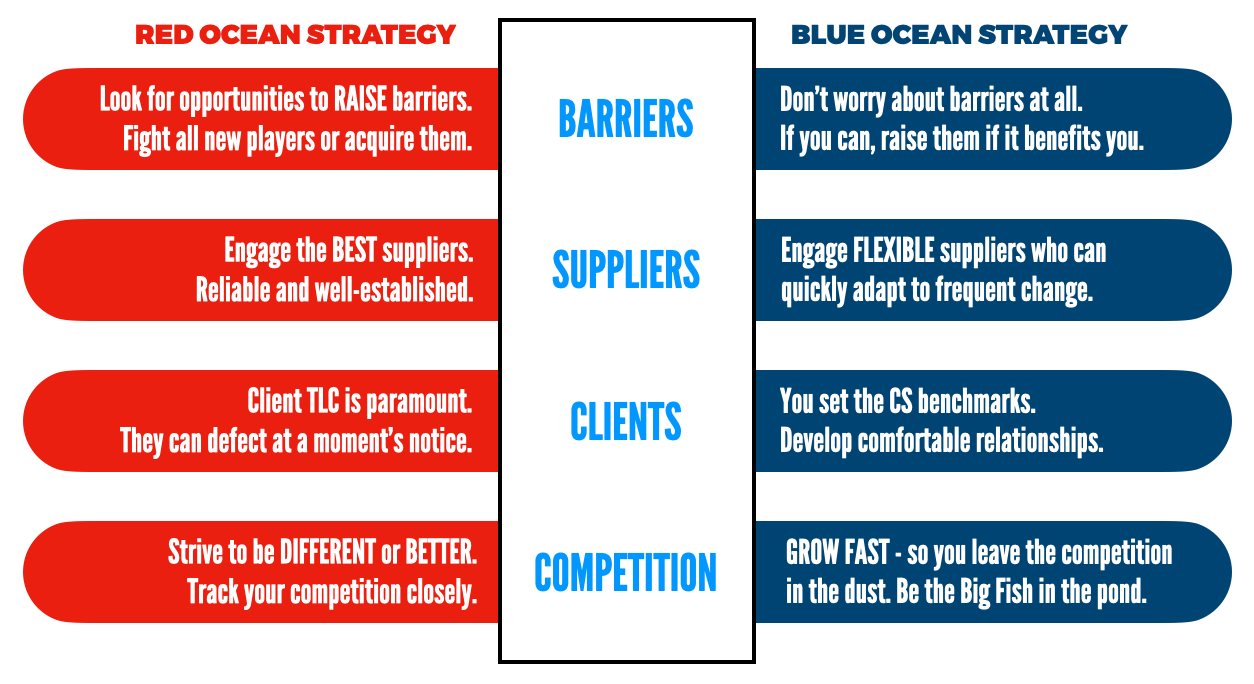
To venture into a Red Ocean Strategy:
Barriers: Look for opportunities to raise your barriers to entry. Fight all new players or acquire them.
Suppliers: Engage the best suppliers in the industry who are reliable and well-established.
Clients: Client TLC is paramount, they can and will defect at a moment’s notice.
Competition: Strive to be different or better and track your competition closely.
To venture into a Blue Ocean Strategy:
Barriers: Disregard your barriers — if you can, consistently raise them if it benefits you.
Suppliers: Engage with agile and flexible suppliers who can quickly adapt to frequent changes in your needs.
Clients: You set the customer service benchmarks in your industry — develop comfortable relationships with clients.
Competition: Grow as fast as possible and leave the competition in the dust. Be the Big Fish in the pond.
Additional Resources:
Blue Ocean Shift: Beyond Competing - Proven Steps to Inspire Confidence and Seize New Growth

Management Tools For Leaders: The FADE Cycle
FADE is a quality performance model and a simple methodology for business improvement. I use it often with clients to help them grow their business or initiate a major change in their career.
Tool #4 - The FADE Cycle
This week, let’s focus on a simple methodology for problem/process review and improvement - The FADE Cycle.

Summary:
FADE is a quality performance model and a simple methodology for business improvement. I use it often with clients to help them grow their business or initiate a major change in their career.
Benefits:
In many instances, quick, off-the-cuff 'executive' decisions are made to solve endemic problems (upper management is notorious for doing this — they know better than you). The Fade Cycle is a powerful tool to help you stand back, analyze the issues with data, develop a solid solution, and execute with confidence.
History:
The FADE model was developed by Duke University, analyzing the acronym into four steps — Focus, Analyze, Develop, and Execute. A part of QI (quality improvement) and Six Sigma, the FADE Cycle is used by many prominent organizations globally.
Applications:
The best way to perform the FADE Cycle is to have critical constituents in the room to assist in providing insight/data and developing the analysis. The problem might be as simple as a dysfunctional program that requires a deeper fix to create a new product line. The FADE Cycle is set in four stages:
FOCUS STAGE
Exploration starts with a belief or suspicion that there is a hidden problem or an opportunity for improvement.
1. Generate a list of problems (issues) — brainstorm with your team as many contributing areas you infer to be the dysfunction.
2. Select (vote) one problem — this is critical - building consensus and agreement at this point will guide you forward.
3. Verify and define the problem — check that this is the real issue, confirm, and clearly define what the issue is.
ANALYZE STAGE
Gather and analyze information, recognize the root cause, and establish solutions.
1. Decide what you need to know — go through the team and collect as many questions you’ll need to answer with data and info.
2. Collect data/baselines/patterns — this will help you when assembling organizational commitment - use facts and data to convince them.
3. Determine influential patterns — a critical step - this is where things start coming together.
DEVELOP STAGE
From the gathered data, develop techniques for advancement, including enactment, communication, and observing.
1. Generate promising solutions — Bring everyone together and brainstorm possible solutions based on the Analyze stage.
2. Select the solution — Multi-vote with the team and decide on one plan of attack.
3. Develop an implementation plan — Don’t let the team out of the room before you assign roles, responsibilities, and deadlines.
EXECUTE STAGE
Implement the developed plans on a pilot basis, and install a process control program that is in use for success.
1. Gain commitment — ensure you have organizational commitment, signoff, budget, and backing (this is critical for success).
2. Execute plan — Now run with the ball, keep an eye on all resources and deliverables, and keep a tight Gantt chart plan.
3. Monitor and measure impact — Once launched, measure the effect and make subtle adjustments along the way.
The four steps of FADE should be part of a continual review and improvement process for any organization. Check it out!
Management Tools For Leaders: Cause & Effect Diagram
It’s a great tool for brainstorming and encouraging team participation. It allows you as the leader, to help your team understand the root causal elements of a problem and (have them) identify areas of improvement. They solve their own issues!
Tool #3 - Cause & Effect (Fishbone) Diagram
This week, let’s focus on a great root causal analysis tool - the Cause & Effect Diagram. It's also called a 'fishbone diagram' because it resembles a fish's bone structure.

Summary:
It’s a great tool for brainstorming and encouraging team participation. It allows you as the leader, to help your team understand the root causal elements of a problem and (have them) identify areas of improvement. They solve their own issues!
History:
Fishbones or causal diagrams were popularized by Kaoru Ishikawa in the 1960s that show the potential causes of a specific event.
Applications:
Common uses of the diagram are process issues, product design, or quality defect prevention to identify potential factors causing an overall effect. For our purposes, we will focus on management problems/process issues.
Step One: State the problem or ‘effect’ (red oval).
This is why we’re all here — pick a problem that is affecting your team’s performance or productivity or holding back the progress on a team project.
Step Two: Identify the main causal groups (black ovals).
Let your team brainstorm each one and don’t interrupt unless they need a little push to get their ideas flowing.
Step Three: Identify the causal elements within each group.
This is where the rubber hits the road — allow your team to come up with multiple causal elements for each grouping. At this point, a grouping will either get stronger or weaker — and if it gets weaker, eliminate it.
Step Four: Prioritize the causal groups from most to least important.
Have your team vote on each grouping — whether it moves closer to the problem statement or farther away. This process simplifies the fishbone for the next step.
Step Five: Identify the root cause in each group (red type).
This is a contentious area — but it allows your team to clearly define what the real problem is. Once you do this, it will simplify and personalize your plan of attack on the problem.
Step Six: Develop an action plan to ameliorate the root causes.
Let them develop their action plans to solve their problem. Not you, you are only the facilitator — don’t let them put tasks/responsibility on your back.
Some managers might find this tool a little over-structured and pedantic. All I have to say is, “Trust It”. I’ve found that some of the most simple problems have very ingrained and complex causes — and it helps you to let your team uncover it on their own rather than barking out solutions.
Management Tools For Leaders: The 9-Box Grid
It’s a great snapshot to get a better understanding of where each member of your team is and where they need to go. Our job is to do less formal quantification and more informal qualification with each team member — we’re looking at 9-10 employee teams, not 90-100.
Tool #2 - The Nine Box Grid
This week, let’s focus on a great talent management tool - the 9-Box Grid.
Summary:
It is a grid-based assessment tool used to evaluate employees' performance levels and potential for growth to fit them into each of these 9 areas.

History:
Developed and used by many consulting firms, it’s a mainstay of many HR departments to quantify and compartmentalize large swaths of employees. For that purpose, it’s a bit outdated.
Applications:
For our purposes, it’s a great snapshot to get a better understanding of where each member of your team is and where they need to go. Our job is to do less formal quantification and more informal qualification with each team member — we’re looking at 9-10 employee teams, not 90-100. Let’s review each box:

Top Talent (1 box, green) — These are your stars, your right-hand people who never fail you and frequently impress you. They are your future leaders who will ultimately push you upwards into another role or move into their own group.
ACTION PLAN: Massively delegate your responsibilities to them, give them management spots to coach associates under them, and most of all, encourage them to mentor many of the other areas to ensure they see the light. These are the people you point to during team meetings to acknowledge their frequent positive contributions to your success.
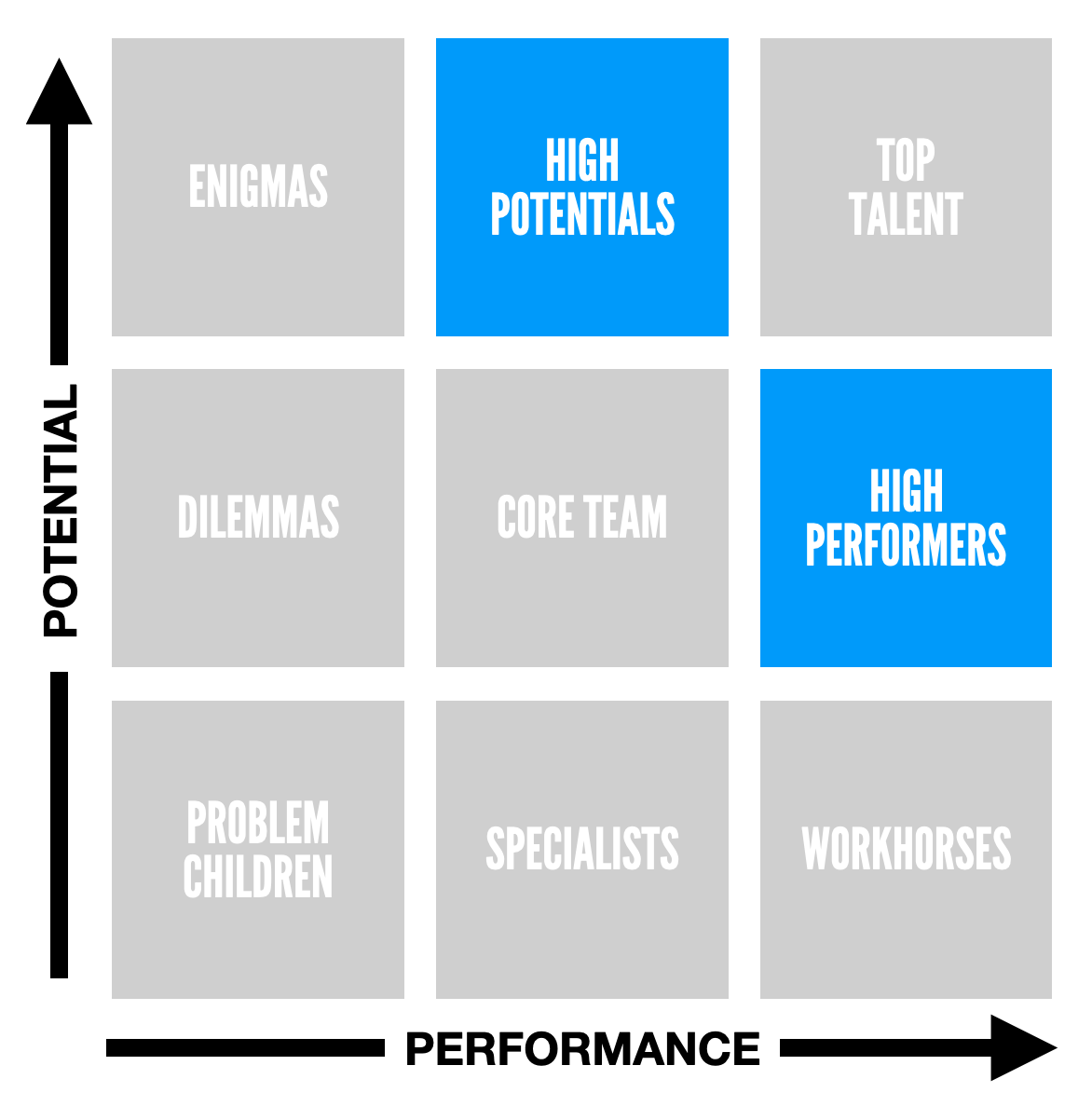
High Potentials & High Performers (2 boxes, blue) — These are your future stars — they have the potential to move into the Top Talent spot within the next six months with the right mentoring and instruction.
ACTION PLAN: Give them ever-increasing responsibilities, slowly drawing back the management curtain and showing them high-exposure opportunities and insight. You want the high-potentials to perform better and the high-performers to develop their potential — so that means one-on-one coaching from you and your top talent people. In the future, these two areas will play a major role in succession management.

Core Team (1 box, navy): These are your average performers — and the ones who need a real push to move into the upper-right areas of your grid. Why? Because if you orphan them and let them go off on their own, sometimes they move to the lower-left areas and cause future issues.
ACTION PLAN: They need TLC — attention, important responsibilities, longer-term projects, and most of all, acknowledgment.

Enigmas & Workhorses (2 boxes, gray): These two areas are the hardest to deal with because they are either very high in potential or performance — so it makes it hard for you to communicate their faults — they will counter with reasons why they are good at what they do. I find Engimas easier to deal with — they have incredible potential (smarts, knowledge, experience), but for some reason, they just aren’t delivering anything of substance. They usually think of themselves as geniuses, but their own ego shunts their performance. Workhorses are a totally different animal — they deliver the goods, but they’ve sacrificed their potential for growth with a base knowledge to perform. These people are your ‘workhorses’ and might never rise above their grade level.
ACTION PLAN: Enigmas — You need to micro-manage their performance incrementally and show them that you won’t go away until they start delivering. Being knowledgeable about your role is just one dimension — they need to perform. Workhorses — You need to find out why they are so good at their role at the expense of growing future potential. Are they afraid of success? Do they just want to be left alone and allowed to work in their private niche forever?
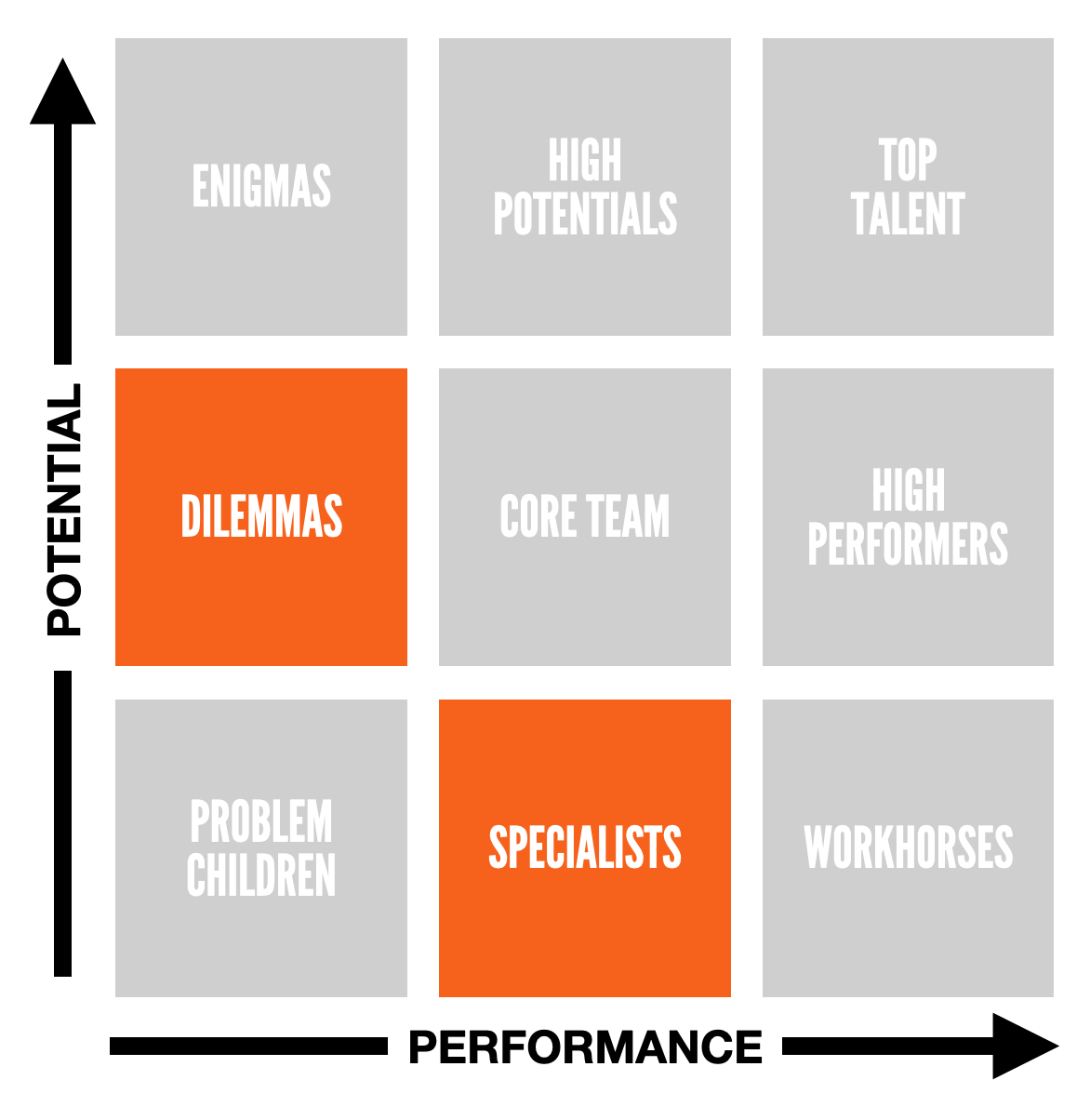
Dilemmas & Specialists (2 boxes, orange): Dilemmas have average potential, but their performance is lacking — they are either slacking or lost. Specialists are really good at what they do but are solely focused on a specific area that might be static or dying (this happens frequently in IT and Finance).
ACTION PLAN: Dilemmas — You have two choices, take one last chance and have one of your top performers mentor and get them out of the woods, put them on a PIP to jolt their system into action, or farm them out. Specialists — their potential for growth is lacking (or non-existent), so you need to give them a clear mandate that either they start to venture out into new vistas or you’ll have to PIP them to recognize they have to move up to survive.

Problem Children (1 box, red): These are employees who are low on performance and potential. There are many different names for them, including talent risk, bad hire, underperformer, and iceberg. They do just enough to stay under your radar, but ultimately, they are hurting you and your team. Odds are they are disrespecting you behind your back, push back often during meetings, and yet they feel invulnerable.
ACTION PLAN: I’ve seen this many times — I would immediately put them on a 30-day performance improvement plan (PIP) and replace them immediately (unless they have real potential).
Action:
Print out the grid and mark your people in or around each box (sometimes people are never just one area). This will give you a roadmap on what to do with each team member’s future. Enjoy!
Management Tools For Leaders: The Pareto Principle
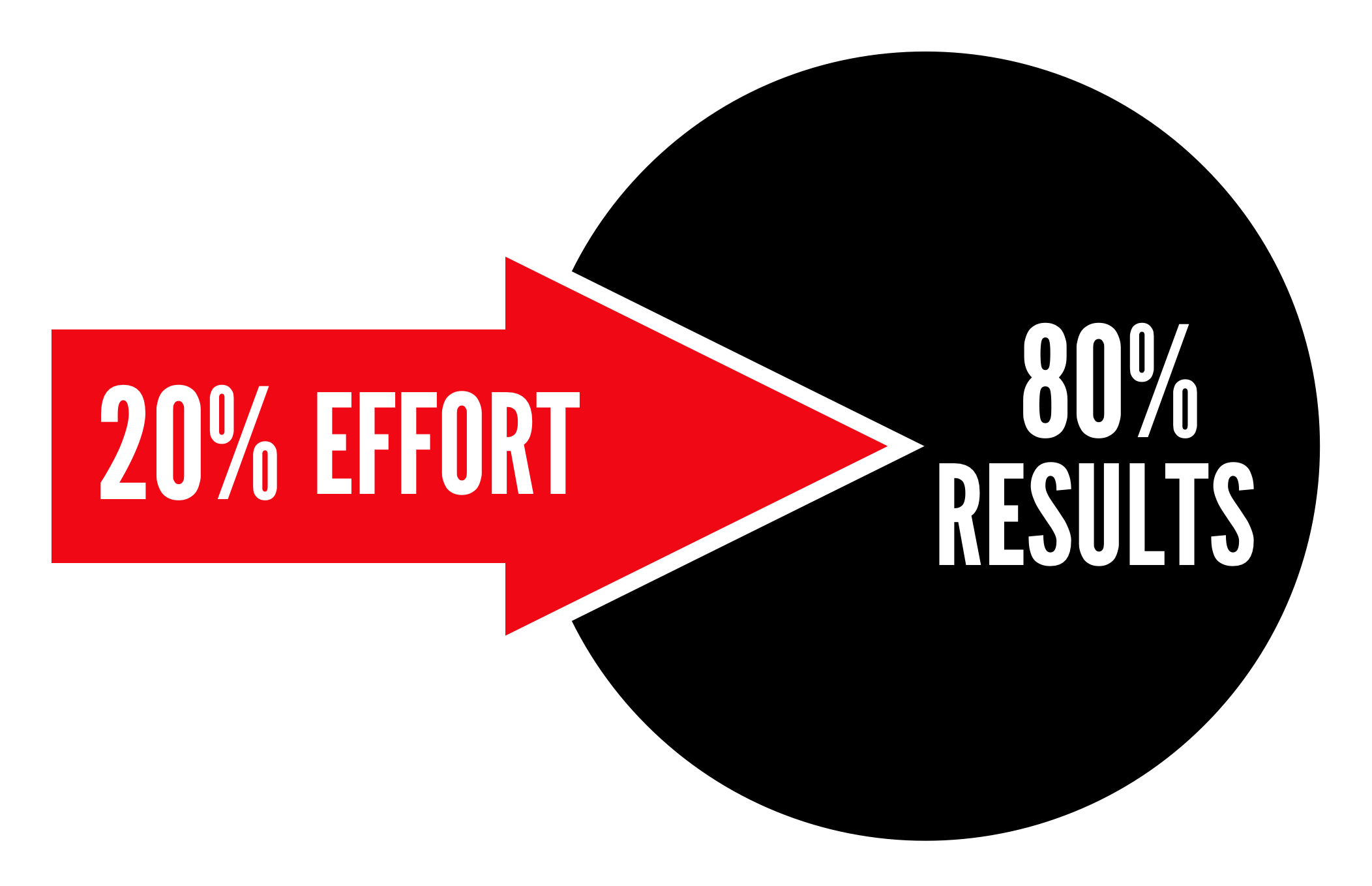
The Pareto Principle states that for many outcomes, roughly 80% of consequences come from 20% of causes (the "vital few"). Other names for this principle are the 80/20 rule or the law of the vital few.
Tool #1 - The Pareto Principle
Each week, I will be presenting tools that most leaders use to solve problems, run successful initiatives, and most of all, deliver like a leader.
This week, let’s start out with one of my favorites, The Pareto Principle.
Summary:
The Pareto Principle states that for many outcomes, roughly 80% of consequences come from 20% of causes (the "vital few"). Other names for this principle are the 80/20 rule or the law of the vital few.
History:
Management consultant Joseph M. Juran developed the concept in the context of quality control, and improvement, naming it after Italian economist Vilfredo Pareto, who noted the 80/20 connection while at the University of Lausanne in 1896. Pareto showed that approximately 80% of the land in Italy was owned by 20% of the population.
Mathematically, the 80/20 rule is roughly described by a ‘power-law’ distribution for a particular set of parameters, and many natural phenomena have been shown to exhibit such a distribution. It is an adage of business management that "80% of sales come from 20% of clients".
Application:
Most managers happily service all their clients the same way, not knowing that some clients deliver more income/profit than others. The best way to uncover who are your ‘best’ clients is to use this tool:
Take your entire client list and sort them by income.
Take the top 20% of your clients and total the income.
Take the bottom 80% and also total the income.
Most of the time, you’ll instantly see that the top 20% is close to the bottom 80% of client income.
You’re allowed to move the line around to include/omit clients (this is not an exact science).
Here’s the kicker — look at the bottom 20% of clients and start making decisions about working with them. Do you continue, modify, or stop doing business with them? Most of the time, these are ‘high-attention’ clients that really don’t deliver the profits you’re getting from the top 20%.
What extra services or attention can you pay to the top 20% to retain and grow your bottom line with them? Move your attention from the lower performing clients to the highest-performing clients. Also, look at the mid-section clients and develop behaviors to move them up into the top 20%.
This kind of thinking will subtlely change how you and your team manage client groups. One corporate board that I’m on realized this principle and it revolutionized how they interact and view their clients — and their YOY revenue increased by 20%.
You can also apply the Pareto Principle to team management or project management too. Teach your people to focus on the top 20% of vital tasks that they determined are the most important to their success.
Most of the time, they never focus and treat all tasks the same way. If they truly focus 20% of their time and attention on getting things done the right way, these few top 20% tasks will produce 80% of their success.
Are You Being Bullied?
Bullies will come out of their caves to exploit this vulnerability and target your confidence.
I hate bullies. I’ve encountered bullies in elementary school, certain professors in college, and most of all, on the job.
There are all sorts of bullies in the workplace:
Your boss vacillates on decisions and makes it seem like your fault.
Peers valiantly try to one-up you by making you look bad.
Support staff do the bare minimum and push you around because it’s not your area of expertise (like IT or Finance).
Peak hunting time for work bullies is the first 90-180 days on the job.
Naturally, you won’t be as good as your colleagues or as you were in your last position. It’s natural to take a few weeks/months to get accustomed to a new role or job. I frequently say to my clients that it’s a new company, new people, processes, clients/customers, systems, products, etc. Everything is new/unique, and you’re in learning mode.
And bullies will come out of their caves to exploit this vulnerability and target your confidence.
They will try to tarnish your image within the team and impact your self-esteem to enable them to exploit you. It is also more common for senior co-workers who use their positions of power to show such behavior. Some solutions:
Never Apologize.
Do not apologize unnecessarily. Instead, try saying, “Oh, this is how it’s done; no one told me this. Thanks for highlighting it. Is there anything I should keep in mind?” I find ’Sorry’ is the most straightforward word to flow into work conversations — eliminate it for bullies.
Ask Questions.
Ask questions from the start, be vocal. Do not let the bully think they can talk over you and shut you down. Being vocal and insistent is hard to do. Some bullies are too manipulative and might intimidate you into silence. Force yourself to ask pointed questions to get to the absolute truth of the matter.
Show Confidence.
The best way is to show confidence when sensing such behavior. Seek mentors/colleagues at work who believe in you and build you up. Ultimately, you might have to work on building your confidence for the long term — seek out resources on building confidence or maybe hiring a coach.
If you are someone actively being bullied — I am so sorry you are going through this. It’s tough when someone exploits you at your weakest. Seek out trusted colleagues and tell them what is happening and how you feel. Sharing helps.
You might find out that this person bullies everyone, and they have a solution on how to diffuse their behavior. If it genuinely affects you or your work product, talk to your boss — that’s what they’re there for — to protect you and make sure everyone is playing nice in the corporate sandbox.
If it’s severe and consistent bullying by multiple transgressors over time (and you’ve tried your best to reach out to solve the issue), your best option is to start over or get a new job. Such toxic work cultures are not worth your time.
If you are stuck at that company and cannot move because of monetary (or other reasons), remember to remind yourself of your achievements and how far you have come, do not let these bullies dent your self-worth because that’s what they prey upon.
Learn How To Better Communicate With Your Audience.
Communication is a critical component of almost any day-to-day activity. Your audience might be a group of clients, a customer in your store, your team, or just the most significant prospect you’ll ever land.
Communication is a critical component of almost any day-to-day activity. Your audience might be a group of clients, a customer in your store, your team, or just the most significant prospect you’ll ever land.
1. Know Who You're Speaking To.
Too many people wing it. They think they know their audience - but they find out they’re WRONG. It’s happened to me.
Be prepared. Learn their background, where they’re coming from, and what they really want.
Times are changing rapidly – people’s attitudes and beliefs have radically changed in the past two years – you can’t just speak to them like you always have.
2. What Is Their REAL Problem? Burning Issue?
Understand your audience's issue, not your issue. What are they struggling with, what is their pain point, where do they need help?
Collect your thoughts in shorthand as they talk. They will be all over the place, but soon you’ll hear a pattern; they’ll keep circling back to the same issue. Now stop right there. That's probably NOT the issue. It would help if you asked probing questions to get to the real issue. Don’t jump to the solution; you are in the ‘problem collecting’ phase.
Leave time to reflect on your conversation. Go back to what they think the problem is, but more importantly, what is going on based on your vast experience. Now you can work on the solution and develop a positive path to success.
3. Speak Their Language.
Stop with the acronyms and fancy industry terms. It doesn’t make you sound intelligent. Just the opposite – your audience will shut down.
Keep it simple – talk in their language – especially when you're trying to move them to your way of thinking.
When you're selling, negotiations, significant changes in business strategy, or selling an expensive item/package – ensuring your audience UNDERSTANDS is paramount.
4. Next Steps.
You've listened and communicated; now, you need to communicate as clearly as possible.
Make your next steps SMART – Specific, Measurable, Attainable, Relevant, Time-Bound. This will be great for you and your client.
5. Listen to our podcast on this topic here.
6. Learn More:
Building A Story Brand by Donald Miller.
Knowing When To Quit Is Essential.
We’ve all done it — staying too long at a company and then getting laid off.
“All successful people have quit. Some, often. Knowing when to quit is essential.”
— Scott Galloway
We’ve all done it — staying too long at a company and then getting laid off.
We get complacent — the high pay, knowing precisely what to do, having a lot of friends, getting into a comfortable routine, etc.
We get LAZY. And then management comes along with an org change or a reduction in force and next thing you know, you’re updating your resume.
You need to be ahead of the curve and anticipate these changes. If you aren’t a linchpin in your company, you’re just a cog that can be easily replaced (or even worse, eliminated permanently).
I run into many executives who thought they had it made:
15-20+ years at the same company
Moving slightly up, but more left-right-zig-zaggy to other departments and projects
Ever growing salary bumps into the mid-six figures
And then it all goes away with one early morning meeting with your boss and an HR rep. You suddenly find out that your ‘linchpin status’ evaporated years ago and you’ve been wearing the ‘cog’ pin for years.
This is probably THE BEST TIME in the last 40 years to make your move to another company. I’ve had clients get interviews, offers, and new jobs within a few weeks. But it won’t last forever.
So if your company isn’t doing great, if you feel an org change/layoff in your future, or if you’re seeing many of the best people at your company leave . . .
It’s time to get out.
The Secret For Running Great Meetings.
How do we make our meetings better? Get more accomplished in less time? Shut down the gabbers and get the smart people talking? I have three actions that make my meetings fun, collaborative, and powerful.
Meetings suck.
I know — we've all attended those 2-3 hour status meetings that drone on forever, stray WAY off course, and never get anything accomplished.
And the personalities — the boss who thinks they're so important, the empty suit who has ‘great’ ideas and yet never acts on them, and the quiet triumvirate in the corner who never says anything.
Now move that into a virtual world which makes it SO MUCH WORSE.
How do we make our meetings better? Get more accomplished in less time? Shut down the gabbers and get the smart people talking? I have three actions that make my meetings fun, collaborative, and powerful:
ACTION 1: Flip it up.
Most meetings try to do these four things: communicate, collaborate, build trust, and motivate. I want you to flip that around — when you hold your next meeting, focus on how you will motivate your team, build trust, collaborate, and communicate.
Don’t just host a meeting — make it powerful. Figure out how the meeting should motivate your team, build trust between you and them, deliver a platform for healthy collaboration, and finally, host a two-way communication platform so everyone participates equally.
Whenever you schedule a meeting, you are taking people away from the real work that matters. So make sure this time is important, powerful, and motivational — so when they head back to their desk, they are focused and excited about what they do.
ACTION 2: Make them shorter — way shorter.
Outlook has corrupted our meetings. When you schedule a meeting, Outlook naturally blocks out a one-hour segment. Meetings don’t have to be an hour! How many times have you attended a meeting and within 15 minutes, you solved the problem, and now you veer off into uncharted territory for the next 45 minutes?
Schedule half-hour meetings or even better, 15-minute meetings. Get in, state the issue, and get out. Don’t be afraid of hosting a 5-minute status meeting — everyone chimes in and know what they have to do — say goodbye and leave the Zoom meeting. The shorter, the better. I used to hold 5-minute project status meetings while everyone stood. My team LOVED them — get in-get out.
ACTION 3: Have an agenda.
Structure is the enemy of a bad meeting. If you send out a quick, short agenda of what you’d like to accomplish and discuss, attendees can come prepared and you can run a faster, more efficient meeting.
How many meetings do you attend without an agenda? How many of them are awful? A short, 3-5 point agenda can cut down on side conversations, eliminate irrelevant diversions, and shut down the Tommy-Talk-A-Lot’s who always attend.
Try one action (or all three) this week. You’ll thank me.
Do Not Hit That Snooze Bar!
We all love our sleep. It’s the only time we have to ourselves, and rightly so, we should be selfish when it comes to healthy, restful sleep.
We all love our sleep. It’s the only time we have to ourselves, and rightly so, we should be selfish when it comes to healthy, restful sleep.
Getting a good night’s sleep is incredibly important for your health. It’s just as important as eating a balanced, nutritious diet and exercising.
Sleep helps your body and brain function properly. A good night’s sleep can help improve your learning, memory, and decision-making — in addition, it supports a healthy immune system. What’s more, getting insufficient sleep has been linked to a higher risk of conditions such as heart disease, diabetes, and obesity.
Before digital clocks, engineers were restricted to nine-minute snooze periods by the gears in a standard bedside clock — and because the consensus was that 10 minutes was too long and could allow people to fall back into a “deep” sleep, clockmakers decided on the nine-minute gear.
But then we keep hitting the snooze bar. Again and again and again. Most sleep researchers say snoozing won’t make you any more rested. If anything, it can make it harder for you to wake up.
That grogginess and disorientation that we experience upon the first few waking moments are called sleep inertia. Hitting the snooze button repeatedly disorients your body, raising the chances of this sleep inertia extending two to four hours into your morning.
What’s happening? You’re disrupting that REM sleep or dream sleep. If a person feels the need to hit snooze repeatedly, it could indicate that they’re either not getting enough sleep or might have an underlying sleep disorder.
What can you do?
Figure out the perfect amount of sleep you need. Most people need 7-8 hours of sleep to feel well-rested. I found out I need 7 hours of sleep and no more than 8 hours. After 8 hours, I feel groggy and disoriented, like a slight hangover. So I make sure that I get exactly 7 hours during the week and 8 hours on the weekends.
Set up times to go to bed in relation to when you will get up. I go to bed most weeknights at 10 PM and plan to get up by 5 AM. This allows me to get a jump on the day and start coaching my executive and business clients at 6 AM. Make it a habit, and you’ll find it gets easier after a few weeks.
Stop using your clock to wake you up. For over five years, I’ve been using an app on my phone called Sleep Cycle — it tracks and analyzes my sleep, waking me up at the perfect time, feeling rested. It tracks your sleep cycles by listening to your sounds and wakes you up at the ideal time by slowly increasing the volume on beautiful music alarms when you come out of REM sleep.
IMPORTANT: Here comes legal stuff: I am not a doctor, nor do I have the ability to give medical advice. Please consult your doctor if you feel you might have a sleep/health issue. In addition, Sleep Cycle is not a sponsor — I’m just spotlighting an excellent tool for my readers. Use at your own risk. End of legal stuff.
How Leadership REALLY Works (and why your team isn’t crushing it every day).
You’re a good manager. You listen to your people. You help them with obstacles. You try your best to be a better leader.
But for some reason, your department is stagnant. You aren’t getting the ‘hot’ projects. Your team comes to work defeated and war-torn. And worst of all, you see other teams all moving up.
What’s going on? Your team isn’t effectively growing and developing to allow all ships to rise. Many managers complain about team infighting, missed deadlines, focusing on emergencies rather than priorities, and a general malaise of new work, ideas, and solutions.
You’re a good manager. You listen to your people. You help them with obstacles. You try your best to be a better leader.
But for some reason, your department is stagnant. You aren’t getting the ‘hot’ projects. Your team comes to work defeated and war-torn. And worst of all, you see other teams all moving up.
What’s going on? Your team isn’t effectively growing and developing to allow all ships to rise. Many managers complain about team infighting, missed deadlines, focusing on emergencies rather than priorities, and a general malaise of new work, ideas, and solutions.
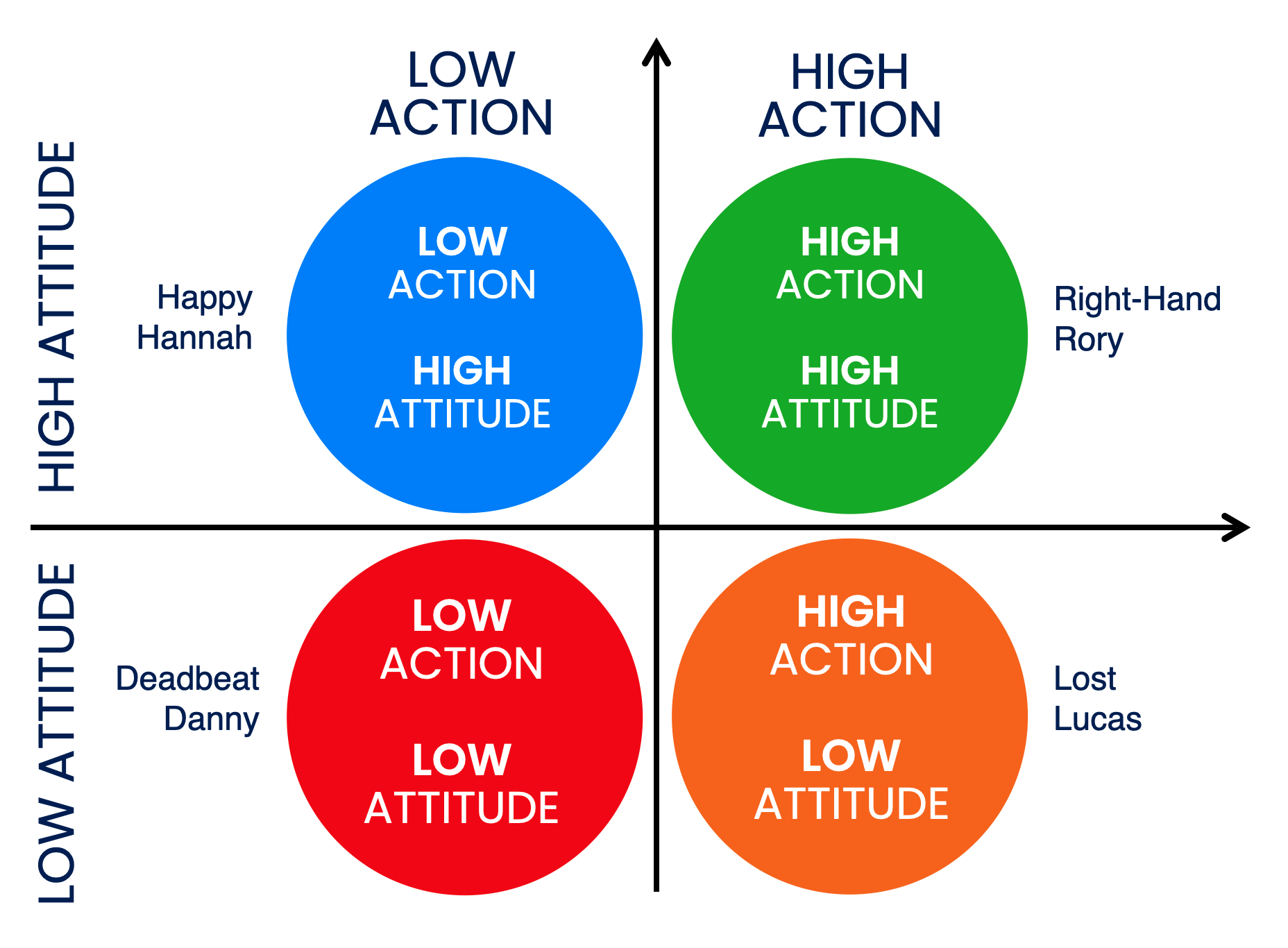
High Action people focus on getting things done. They are deadline-oriented and come to work with a full tank of gas — they don’t sit around and wait for something to happen — they make it happen.
Low Action people are what I call ‘just jobbers’ — they are not assertive in their work. They watch the clock and try to stretch simple responsibilities into day-long extravaganzas.
Low Attitude people bring an opposing viewpoint to everything they do. They’re the complainers, the obstacles, the ‘can’t-do’s.’ You’ll spend an inordinate amount of time handling their daily drama and try to motivate them to make it through their weekly tasks.
High Attitude people understand work is a part of their life. They are engaged in the process and take on challenges with aplomb. They energize their people with a ‘can-do’ attitude and bring new ideas, solutions, and insights to everything they touch. And they do it with a smile.
There are four types of people on your team:
Right-Hand Rory (high action, high attitude) - Rory is a keeper — someone who will probably take your place someday. She will get her work done (and then some), she consistently asks for more challenging work, and she does it with a positive, infectious attitude. She reminds you of YOU.
Happy Hannah (low action, high attitude) - Hannah is a bright light for your team, but she can only accomplish her essential duties each day. Anything new is highly challenging for her, and she frequently hits obstacles and misses deadlines because of her abilities. But she still brings a positive view to work and everyone she works with.
Lost Lucas (high action, low attitude) - Lucas attacks work with vigor; he dives into any project or task with excitement. But his attitude is tripped up with indecision and barriers, which ultimately trips up his action and brings it to a hard stop.
Deadbeat Danny (low action, low attitude) - he is an anathema to your people. Not only does he not take action on his current duties, but his poor attitude is infectious and damaging to others on your team.
You will have gradations of people that span low/high action and low/high attitude. But it is imperative that you measure them on the matrix to understand where they are now and what you must do to move them up (and to the right).
ACTION STEPS:
High Action/High Attitude Quadrant — (Right-Hand Rory) Consistently point to their work and give them accolades in front of your team. They are the shining beacon your team should aspire to and ensure that you give them frequent acknowledgment, focus, more challenging work, and most of all, increased pay and bonuses to keep them happy and engaged.
Low Action/High Attitude Quadrant — (Happy Hannah) Give them tightly-controlled task lists weekly so they know exactly what is required of them and when you’d like to see it. They are engaged mentally, but they are impacted by external forces that trip them up. So your job is to grow their confidence, their knowledge base, and their relationships to the Rorys on your team to mimic.
High Action/Low Attitude Quadrant — (Lost Lucas) Don’t interrupt Lucas’ momentum with projects and tasks; they get things done. They need an attitude adjustment — find out what the real problem is — it might be some people around them, acknowledgment from you, or even a personal issue. The faster you find out why their attitude sucks and how it’s affecting their career (and the team), the quicker you can both change it for, the better.
Low Action/Low Attitude Quadrant — (Deadbeat Danny) If you have any people that consistently live in this quadrant, you need to give Danny a sharp action/attitude adjustment. They need to be closely monitored on all their activities and ensure they understand that their poor attitude makes you re-think their future at the company. They need to know that you will be taking severe next steps if they don’t change their ways quickly.
How Corporate REALLY Works (and why you’re not moving up as fast as you should be).
You work hard. You come in early, stay late. You're good friends with everyone. If asked, you jump for your boss.
But for some reason, you’re not moving up. You don’t get that promotion. You get paltry bonuses. And worst of all, people whom you’d never expect to move up, do.
What’s going on? You’re not playing the game by the same rules that THEY do.
You work hard. You come in early, stay late. You are good friends with everyone. If asked, you jump.
But for some reason, you’re not moving up. You don’t get that promotion. You get paltry bonuses. And worst of all, people whom you’d never expect to move up, do.
What’s going on? You’re not playing the game by the same rules that THEY do.

High Exposure people focus on projects, activities, and areas that have a high potential for visibility and exposure to the people that matter.
Low Exposure people do their job (and they do it well) - but they do low-visibility, fundamental work that is important, but not sexy.
Low Ethics people are focused on one goal — themselves. Each decision, each move, every relationship is solely based on moving up, even at the expense of others. Now we all are a bit self-centered — we need that to stay alive in the corporate jungle. But true low ethics people will do anything to move up (and to sometimes make others look bad). In addition, low ethics people don’t care about the company or their work product.
High Ethics people are focused on the quality of work in your organization. Is this good for the company? Is this good for the team? How can we stay ahead of the competition? I almost named this section ’selfless’, but in reality, no one is selfless in a corporate atmosphere.
Now there are gradations of Low/High Exposure and Low/High Ethics people. And here is where the magic comes in. You do not need to be a High-Climber Holly to make it big. You probably know a few Hollys right now (and they're awful people).
These people are easily seen by highly perceptive leaders and kept in their place because they are ultimately anathema to the organization. High-Climber Holly cuts corners, hides mistakes, blames others, does legally hinky things that would scare a normal person. You can find many of these usual suspects in typical places (Wall Street, Government, and Prison).
What you need to keep your eye on and fight against is becoming a Low-Exposure who also has High Ethics. You get your work done, but no one notices. You complain about how rigged the system is and how no one will help you. And you take the same pay 2% pay increase and paltry bonus each year because it’s the ‘safe’ thing to do.
When I first meet with clients, I tell them about Life’s Three Choices:
Stay — keep doing what you’re doing.
Stay — change the dynamic to change your situation.
Leave — go elsewhere for a better opportunity.
No one chooses #1 but for some reason, many people live in this world right now. “I don’t take chances, I don’t upset the apple-cart, life is good and I do make $$$ (not great, but good).”
Many people are afraid of #3 — but once they become quite fed up with their situation, boss, pay — they decide it’s time to venture out into the unknown. And guess what? They do find that new job — for much more money — with a better boss — and different work! BTW — I can help you with this.
So it’s the New Year and I want you to pick #2 (or #3) — change the dynamic, change your situation.
ACTION STEPS:
Do your homework — look around your organization to better understand the high-potential opportunities (key projects, up-and-coming people, hot areas receiving funding/attention).
Go to your boss — say you’d like to work on more high-profile, interesting projects/work. See what they say. If they say: “Okay, here you go!” — You’re in! Grab it and do your best. If they say: “I have to think about it” — Ask them to reconvene this Friday. If they say: "I really don't know, you need to focus on your current duties." It’s time to look for greener pastures.
My Gift To You 2021
I believe that staying abreast of new ideas, trends, and information is essential to a high-performing career and business. My job is to help YOU cut through the noise and find resources that are worth consuming and energize your spirit. This is my gift to you. Enjoy!
I believe that staying abreast of new ideas, trends, and information is essential to a high-performing career and business. My job is to help YOU cut through the noise and find resources that are worth consuming and energize your spirit.
This is my gift to you. Enjoy!
Stand Out Authors in 2021:
By James Clear
I've read a lot of books on changing behavior and building habits -- this book is different from others in the way it covers an enormous amount of ground in the larger area of self-improvement while seamlessly tying all these ideas back into the central theme of habits.
By Gino Wickman & Marc Winters
You cannot do better than reading this book if you want to get a real handle on what you need to do to get your business in order. You can either have a business that meets your needs and makes your dreams come true; or, you can be part of a day-to-day nightmare.
3. Harvard Business Review's 10 Must Reads Boxed Set (6 Books)
HBR has combed through hundreds of articles on strategy, change leadership, managing people, and managing yourself and selected the most important ones to help you maximize your performance.
Stand Out Podcasters in 2021:
With Chamath Palihapitya, Jason Calacanis, David Sacks, & David Friedberg
Industry millionaire/billionaire veterans and besties cover all things economic, tech, political, & social.
With Tim Ferriss
Self-experimenter and bestselling author, Tim interviews and deconstructs world-class performers, digging deep to find the tools, tactics, and tricks you can use to mimic their success.
With Guy Raz
Guy dives into the stories behind some of the world's best known companies. How I Built This weaves a narrative journey about innovators, entrepreneurs and idealists—and the movements they built. I especially love the story of Sara Blakely starting Spanx.
4. The Best Small Business Podcast
With BJ Flagg & Rich Gee
This should be #1 on your smartphone! Every Tuesday, BJ & I consistently deliver new insights, ideas, and solutions to your business and career problems (4+ years and going strong!).
Stand Out YouTubers in 2021:
Warren Buffett at his best! Watch this video first.
Extra Credit: Sara Blakely & Robert Herjavec are THE BEST.
Paul's mission is to help his audience understand and embrace the future of technology that focuses on Crypto and Blockchain, Electric Vehicles (EV), Autonomy, AI, Robotics, and Consumer Tech.
2. The Google Small Business Channel
This channel blends the big business resources of Google with tons of small businesses in action.
And some of my fun (pleasure) YouTubers you might enjoy:
Silver Cymbal - DIY - to help you do more yourself at home.
GardenFork - eclectic how to's on urban homesteading, home improvement, cooking, gardening, home repair and more.
Now You Know - educational technology channel on everything from Tesla and other electric cars, to vermicomposting and banana ice cream.
Polyphonic - Some of the best-produced docs on music.
Rick Beato - Everything music - he deconstructs great music that I love.
Nerdwriter - A weekly video essay series that puts ideas to work.
What's your Q-SCORE?
How much do the important movers and shakers know you, like you, and find you valuable? Because if you’re one of those employees who think if they just do their job — and they will be rewarded with more money, a promotion, and various accolades — you are sorely mistaken.
A Q-Score is a measurement . . .
It's the familiarity and appeal of a brand, celebrity, company, or entertainment product (e.g., television show). The higher the Q-Score, the more highly regarded the item or person is, among those who are aware of the subject. Q-Scores and other variants are primarily used by the advertising, marketing, media, and public relations industries.
What is YOUR Q-Score at your organization? In your industry?
How much do the important movers and shakers know you, like you, and find you valuable? Because if you’re one of those employees who think if they just do their job — and they will be rewarded with more money, a promotion, and various accolades — you are sorely mistaken.
It’s all about VALUE.
It’s all about your BRAND. How valuable are you to your boss, your organization, your industry? Are you a cog in the machine or a linchpin, once removed, makes the entire engine fall apart? We all wish we were key linchpins, but most of the time, we are plain-ol'cogs.
The higher your Q-Score is, the more in-demand you are in and outside your organization. The more calls from recruiters. The more accolades, bonuses, raises, and promotions you’ll receive. The more you’ll be asked to work on top projects, lead strategic teams, and drive change in your organization and industry.
Learn Your Q-Score
That’s where your Q-Score comes in. By the way, no one is scoring you — you have to score yourself. One point for each ‘YES’. Zero points for ’NO’. ½ point for ‘MAYBE’. (if you'd like, score yourself pre-pandemic):
I work on and deliver key initiatives that drive the future of my organization.
I work with the BEST people in my company — people who are energetic, positive and enjoy what they do.
I frequently interact with upper management (boss’ bosses, leadership team - possibly the board).
Upper management knows my name, my accomplishments, and what I’m working on (they say ‘HI’ to you).
I win major awards for my accomplishments.
I regularly attend industry conferences and meet people outside of my organization.
I speak at conferences or write articles to promote my ideas, my area, and my brand.
I regularly have coffee, lunch, zoom calls with key people outside of my company.
I travel to other divisions, departments, or acquisitions to learn about what they do and spread my brand.
I belong to (and possibly hold office in) industry organizations to contribute knowledge and time regularly.
I’ve been interviewed by industry reporters, been on TV, or highlighted on the web for my ideas and/or accomplishments.
If I left my position tomorrow, my boss (and their boss and upper management) would freak out and try to keep me with major incentives.
How did you score?
12 to 9 points = Industry Mover & Shaker: You take the right actions.
8½ to 5 points = Up & Coming: You’re moving up — keep going!
4½ to 0 points = Transparent/Invisible: Work to build up your Q-Score.
Action Step
Grow your score by actively embracing one or more of the 12 areas I’ve highlighted. Even just one will deliver better job security, more exposure to the right people, and possibly an offer from a dream organization.
No EXCUSES — make it HAPPEN.