What Japanese Train Conductors Can Teach You About Leadership
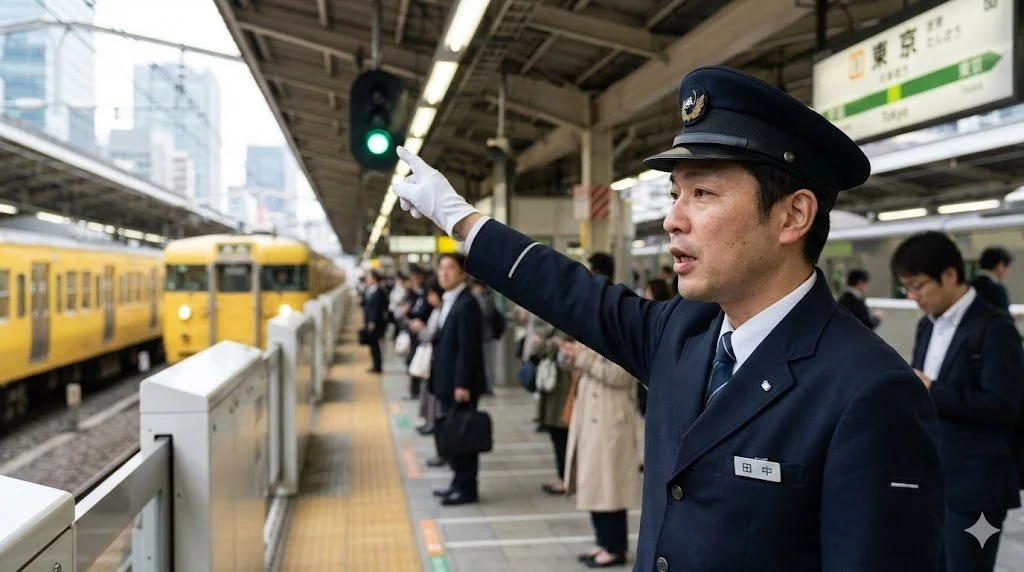
I recently found myself sitting in the quiet of my office after a week of ‘near misses.’ You know those weeks - the kind where nothing actually broke, but everything felt like it ‘almost’ did. A calendar invite sent for the wrong time zone, a crucial attachment forgotten in an email, or that nagging feeling halfway to the office that you didn't actually close the garage door.
I noticed a common thread in my coaching calls that same week. My clients weren't struggling with a lack of vision or strategy; they were struggling with the "fog" of the daily grind. They were moving so fast that their bodies were executing tasks while their minds were already three meetings ahead.
It’s a phenomenon I call ‘Cognitive Drift’. When we become experts at our jobs, we stop thinking about the mechanics of the work. We switch to autopilot. And while autopilot is efficient, it’s also where 85% of our avoidable mistakes live.
When we lose our connection to the "now," we lose our precision as leaders. To fix it, we don't need more complex software or longer checklists. We need to re-engage our senses.
The Power of Presence: Shisa Kanko
I shared a concept with my clients that comes from the high-stakes world of the Japanese railway system: ‘Shisa Kanko’ (指差喚呼), or ‘Pointing and Calling.’
If you’ve ever stood on a train platform in Tokyo, you’ve seen the conductors in action. They don't just glance at a signal; they physically point at it and call out its status: "Signal is green!" When checking their watch against the station clock, they point: "Departure on time!"
To an outsider, it looks repetitive. But the Railway Technical Research Institute found that this simple act reduces human error by nearly 85%.
Why does it work? Most errors happen when the brain is in "default mode." By pointing and calling, you force a "system override." You are seeing (visual), acting (physical), speaking (vocal), and hearing (auditory). This multi-sensory loop acts as a cognitive fail-safe, pulling you out of the fog and back into the present moment.
I’ve started using "Micro-Triggers" like this in my own life. I physically touch my keys, wallet, and phone before I walk out the door. I make a physical "OK" sign with my hand after I lock the house. It sounds small, but it eliminates that mid-day panic of "Did I actually do that?"
"Pointing and Calling" in Your Leadership Style
You don't have to literally point at your laptop and shout in the middle of a quiet office. Instead, you can adapt the *intent* of Shisa Kanko to sharpen your management style:
1. The "Vocalized Alignment."
We often end meetings with a vague "We're all on the same page." Two days later, you realize everyone was reading a different book.
Before ending a status meeting, have each team member "Point and Call" the specifics. Ask them to say out loud: "I am responsible for [Project X] by [Tuesday], and my first step is [Action Y]." Go around the room and make it fun - your team will love how you end meetings. And it works.
Speaking the commitment aloud moves it from a passive thought to an active mental contract.
2. The "Physical Pause" for High-Stakes Decisions
In the rush of back-to-back pings, we often approve budgets or send sensitive emails on autopilot. OMG - I use this ALL THE TIME.
Create a "Physical Gate." Before hitting "send" or "approve" on anything high-stakes, take your hands off the keyboard, touch the edge of your desk, and state the goal: "This approval ensures the marketing team stays on budget for Q3."
This physical break interrupts the "clicking" reflex and forces the brain to validate the action.
3. The "Visual Anchor" Review
When reviewing a report you’ve seen five times, your eyes naturally skim over the errors.
Use a physical pointer (a pen or even your finger) to touch each key metric or name as you read it. I used this technique when I proofed ads years ago.
It syncs your visual processing with your physical movement, making it nearly impossible for your brain to "gloss over" a typo or a wrong figure.
The goal of a great leader isn't just to do more; it's to be more certain of what is being done.
When you find yourself or your team drifting into the fog of "busy-ness," stop. Point to the task. Call out the intention.
By engaging your senses, you aren't just preventing errors - you're reclaiming your focus.